
Smell and memory: why a scent brings a memory flooding back
According to research, a smell brings back a memory because the olfactory bulb connects directly to the brain areas that handle emotion and memory, and because childhood smells are laid down through happy moments repeated many times. By the end you'll be able to tell the solid findings from the folklore, and to test the effect on yourself with things from your kitchen.
By the club team ·
A smell brings back a memory because the sense of smell has an unusually close line to the parts of the brain that handle emotion and memory: according to one research team, the amygdala sits only one synapse away from the receptors in your nose. In July 2026, neuroscientists in Lyon, France, added a piece to the puzzle: their study in PLOS Biology shows that neurons in the olfactory bulb hold on to childhood smells that were paired with happy, repeated moments.
Research supports three things. Memories triggered by a smell tend to come from the first ten years of life, they usually carry more emotion, and they give a stronger feeling of being carried back in time. What research does not show is that smells trigger more memories than pictures or words, or that those memories are more accurate.
What happens in the brain when a smell triggers a memory?
A smell triggers a memory through a very short circuit. Odour molecules reach receptors in the nose, either through your nostrils or from the back of your mouth as you eat, and the signal goes to the olfactory bulb. From there it spreads to areas that include the amygdala, which deals with emotion, and the hippocampus, which deals with memory. A 2014 review by Maria Larsson and colleagues at Stockholm University calls this a unique intimacy between smell and the limbic system.
The same review describes the first brain-imaging study of smell-triggered memory, run in 2004 by Rachel Herz and her team. Five participants recalled a happy memory involving a perfume; the amygdala and the hippocampus lit up more when they smelled that perfume than when they saw a picture of it. Five people is a tiny sample: a lead, not a verdict.
What did the 2026 Lyon study find about childhood smell memories?
The Lyon study started with people and then modelled the effect in mice. Jules Dejou, Nathalie Mandairon and their colleagues at the Lyon Neuroscience Research Center asked 647 adults aged 18 to 85 to describe their earliest smell memory. Four findings stand out:
- Mostly happy: happiness and pleasantness scored highest, ahead of surprise, with fear, disgust, sadness and anger trailing.
- Repeated, not one-off: 73.1% said the event behind the memory had happened more than five times; 13.4% described a single event.
- A pleasant smell: the childhood odour averaged 7.1 on a 1 to 9 scale.
- Met again over the years: 82% of participants still come across that smell from time to time.
In the mouse part, young mice met an attractive odour (limonene, citronellol or camphor) in a playful, enriched cage. As adults they preferred that odour, and when the researchers silenced a set of olfactory bulb neurons born just after birth, the preference collapsed. Without any reminder the memory had faded by six months of age; with regular re-exposure it held, leaning more on the brain's emotional circuits. The cellular mechanism is shown in mice; how far it applies to people is still open.
What actually happens in Proust's madeleine scene?
Proust's madeleine is about taste as much as smell. In Swann's Way, the narrator dips a piece of madeleine in tea and finds himself back on Sunday mornings in Combray, where his aunt Léonie used to give him a crumb of madeleine dipped in her own cup of real or of lime-flower tea. He is explicit that looking was not enough: "The sight of the little madeleine had recalled nothing to my mind before I tasted it". Food odours also reach the nose from the back of the mouth, the retronasal route that the French CNRS research network on smell lists alongside ordinary sniffing, so the taste of a soaked madeleine is partly a smell.
The memory does not arrive in a flash, either. "Ten times over I must essay the task," the narrator says, and what comes back is a weekly Sunday ritual, the kind of repeated moment the Lyon survey describes. Then comes the passage everyone quotes:
But when from a long-distant past nothing subsists, after the people are dead, after the things are broken and scattered, still, alone, more fragile, but with more vitality, more unsubstantial, more persistent, more faithful, the smell and taste of things remain poised a long time, like souls, ready to remind us, waiting and hoping for their moment, amid the ruins of all the rest; and bear unfaltering, in the tiny and almost impalpable drop of their essence, the vast structure of recollection.
Smell and memory: what's established and what's myth
The table sorts popular claims about smell and memory using the studies cited in this Class.
| What you often hear | What the studies say | Verdict |
|---|---|---|
| Smells bring back older memories | Most smell-cued memories date from the first decade of life; memories cued by words or pictures peak between 11 and 20. | Established |
| Smell memories are more emotional | Most studies find this, a few do not. | Established, with exceptions |
| You feel as if you are back there | People report a stronger sense of being taken back in time. | Established, self-reported |
| A smell triggers more memories than a photo | The opposite: smells trigger fewer memories, and more slowly. | False |
| Smell memories are more accurate | The studies cited here record what people report; none checks the memory against the facts. | Not shown |
| Once is enough | 73.1% of the earliest smell memories in the Lyon survey came from scenes lived more than five times. | Not the usual case |
| Humans have a poor sense of smell | A 19th-century anatomist's hypothesis, not a finding from tests; the human olfactory bulb holds a similar number of neurons to other mammals'. | Myth |
| We can tell a trillion smells apart | A 2014 estimate whose calculation was challenged in 2015. | Disputed |
The most surprising row is about frequency. Anecdotes treat smells as powerful memory triggers, the Stockholm review notes, yet in experiments smells call up fewer memories than words or pictures, and more slowly. Because these memories are rare and seldom revisited, the authors suggest, their sudden arrival feels especially powerful.
The last two rows are about the nose itself. John McGann's 2017 review in Science traces the idea of a weak human sense of smell back to the French anatomist Paul Broca, who believed human free will required a proportionally smaller olfactory bulb; McGann notes that we are more sensitive than rodents and dogs to some odours. As for the trillion figure, the 2014 Science paper by Bushdid and colleagues calculated that humans can discriminate at least that many, but Markus Meister argued in eLife in 2015 that the mathematical method could not support the claim. Nobody yet has a reliable count.
Why are childhood smells so hard to put into words?
A childhood smell often comes back without its name: you know it, and you cannot say what it is. Part of that depends on your language. Work by Asifa Majid and Niclas Burenhult found that speakers of Jahai, on the Malay Peninsula, talk easily about many abstract smell concepts that English has no words for.
Naming a smell is a skill you can build, and it pays off for memory too: the Stockholm review reports that when an odour is identified by name, it brings back more memories. That is the point of working through the fragrance vocabulary explained simply and the exercises for training your nose.
Exercise: find a childhood smell and see what it brings back
This exercise brings the logic of the research home: compare the memory a word calls up with the one a smell calls up. You need a notebook, someone to present the smells, and mugs or opaque jars so you cannot see what is inside. Nothing goes on your skin.
- List five smells from your childhood that you can find in a kitchen, a garden or a shop: orange blossom water (see the orange blossom note), cinnamon, a freshly sharpened pencil, cut grass, hot chocolate, a bar of plain soap.
- For each one, read the word alone first. Write down the memory that comes, how old you were, and an emotion score from 1 to 9, as in the Lyon survey.
- The next day, have your partner hold the same items under your nose one at a time, eyes closed, with a minute's break between them. Note the memory, your age at the time, the emotion score and how long the memory took to arrive.
- Compare the two columns. Are the smell memories older, more emotional, slower? Did you recognise the smell before the memory, or the other way round?
- Finish with a smell you have not met for years and notice whether the memory lands more abruptly; the Stockholm review links that suddenness to how rarely such memories are revisited.
This is not an experiment: one person, five smells, no comparison group. It lets you feel what researchers measure. Share what you found in the Everyday Smells circle, or swap methods in the Learning to Smell circle.
Why does a perfume come to stand for a whole period of your life?
A perfume can become the smell of a period of your life for the same reason a kitchen smell can: you met it often, at moments that mattered. The Lyon survey ties the earliest smell memories to repeated, pleasant scenes and to an odour met again over the years; in the mice, the memory faded without reminders. Wear one scent through a chapter of your life and it has every chance to attach itself to that chapter.
That matters when you give fragrance. The person may smell notes, but also a grandmother, a house, a summer. A good scent guide, such as the complete one Mademoiselle Bulle publishes, works from fragrance families and notes, and no guide can know what a smell has already been part of in someone's life. Hence the sample before the full bottle, as the Class on giving fragrance without getting it wrong explains.
Further reading
- Positive early-life olfactory memory is rooted in the olfactory bulb and triggers large-scale changes beyond the olfactory system (Dejou et al., PLOS Biology, 2026) journals.plos.org
- Olfactory LOVER: behavioral and neural correlates of autobiographical odor memory (Larsson, Willander, Karlsson, Arshamian, Frontiers in Psychology, 2014) pmc.ncbi.nlm.nih.gov
- Swann's Way, Marcel Proust, translated by C. K. Scott Moncrieff (Project Gutenberg) gutenberg.org
- Poor human olfaction is a 19th-century myth (John P. McGann, Science, 2017, author manuscript) pmc.ncbi.nlm.nih.gov
- Humans can discriminate more than 1 trillion olfactory stimuli (Bushdid, Magnasco, Vosshall, Keller, Science, 2014) pmc.ncbi.nlm.nih.gov
- On the dimensionality of odor space (Markus Meister, eLife, 2015) pmc.ncbi.nlm.nih.gov
- Physiologie et psycho-physiologie de l'olfaction (GDR O3, CNRS research network on smell, in French) gdr-o3.cnrs.fr
- Odors are expressible in language, if you speak the right language (Lund University Humanities Lab, 2014) humlab.lu.se
What members say
I did the exercise with my partner and the word 'wattle' gave me a nice tidy memory of a school excursion. The actual flowers under my nose took a good few seconds and then dumped me in my grandma's backyard at about six. Older, slower, and actually much more emotional, which is exactly what the table says.
For me the orange blossom water did it straight away, my grandmother's kitchen in Seville, the Easter sweets. But the word alone gave me the same kitchen too. Maybe because orange blossom is a smell I meet every spring?
That fits the Lyon survey rather well, Rafa: most of the earliest smell memories came from scenes repeated many times, and most people kept meeting the smell over the years, so the word and the smell may both lead to the same well-worn memory. Did the smell bring any detail the word didn't?
TL;DR: the 'smells trigger more memories' line is the one I believed and it's the one that's wrong. I basically assumed the nose was the strongest cue because the hits feel so strong. Fewer hits, bigger feelings, that's how I'd sum up the review. That's my two cents.
Morning all, I did it with lavender bags from the airing cupboard and it took me straight back to my nan's dressing table. I've read alot about the madeleine over the years and never noticed it was tea and taste as much as smell. Lovely Class.
Mags x
More Classes
Class no. 20 · 7 min read
Becoming a perfumer: training, related jobs and what 'nose' means
You become a perfumer through specialist training, at ISIPCA in Versailles, the Grasse Institute of Perfumery or after a science degree, then years of smelling raw materials every day. You'll come away knowing who does what around a fragrance, what the schools actually test for, and what the word 'nose' really covers.
Class no. 21 · 6 min read
The scents of Christmas: spice, orange, pine and why they move us
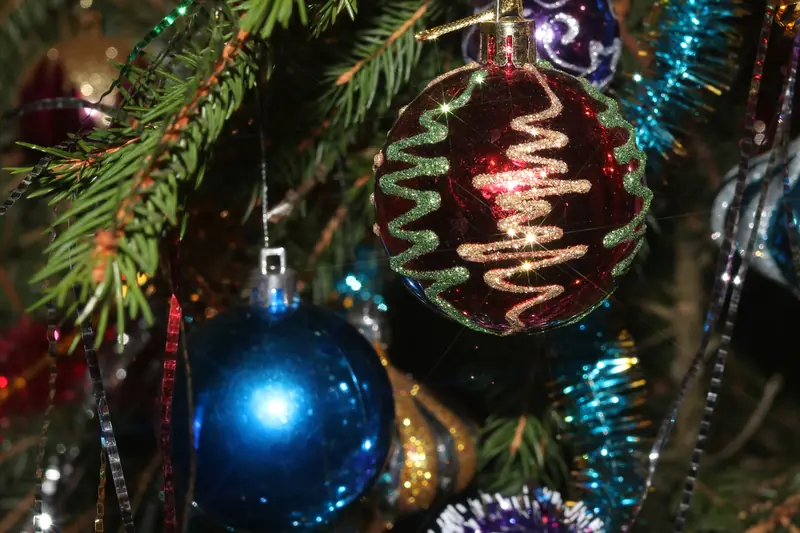
The scents of Christmas come from a handful of materials, cinnamon, cloves, orange, pine, candle wax and honey, that many people have met every December since childhood; and the memories a smell brings back tend to be early and emotional. By the end of this Class you'll be able to pick them out one by one, say what carries each smell, and explain why they bring memories back.
Class no. 22 · 7 min read
Reading a perfume label: ingredients, allergens, batch codes, symbols
A perfume label reads in four parts: the ingredient list with "parfum" and the named allergens, the batch code, the symbols about shelf life, and the concentration, which the EU cosmetics regulation puts no number on. You will know what each detail tells you, what it is allowed to leave out, and how labels differ in the EU, the US and Canada.