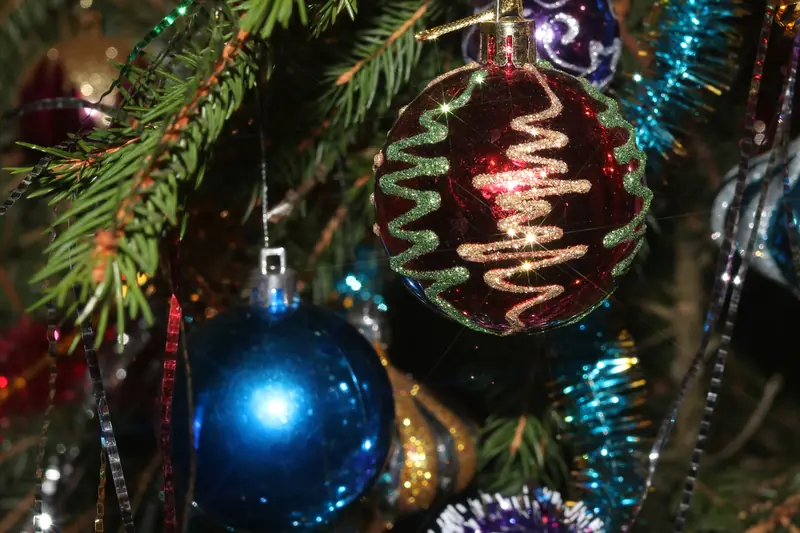
The scents of Christmas: spice, orange, pine and why they move us
The scents of Christmas come from a handful of materials, cinnamon, cloves, orange, pine, candle wax and honey, that many people have met every December since childhood; and the memories a smell brings back tend to be early and emotional. By the end of this Class you'll be able to pick them out one by one, say what carries each smell, and explain why they bring memories back.
By the club team ·
The scents of Christmas come down to a handful of materials: cinnamon, cloves, orange, pine or fir, candle wax, and the honey and spice of gingerbread. None of them is festive by nature. They become festive because you meet them every December, often with family, and often since you were small.
That link isn't mysterious. Rachel Herz of Brown University, in a 2016 review of odour-evoked memory, describes the memories a smell brings back as rarer, older, clustered in the first decade of life, and more emotional than memories cued by anything else.
What are the scents of Christmas, one by one?
Each Christmas smell comes from a specific material, most likely already in your kitchen or living room. The table gathers them with the club page that covers each one.
| Scent | Where it comes from | What you notice | Club page |
|---|---|---|---|
| Cinnamon | The bark of the cinnamon tree | Warm and sweet, with a bite | cinnamon |
| Clove | The dried, unopened flower bud | Spicy, almost woody | clove |
| Orange | The peel, which releases its oil when you bend it | Fresh and sweet | sweet orange |
| Pine and fir | Crushed needles and resin | Green and resinous | pine and fir |
| Gingerbread | Honey or treacle and warm spices | Honeyed, round | the amber family |
Two of these smells have a star molecule. Cinnamaldehyde "gives cinnamon its flavor and odor", in the words of Wikipedia's entry on cinnamaldehyde. Wikipedia's entry on eugenol puts that compound at 80 to 90 per cent of clove bud oil, notes that it also occurs in nutmeg and cinnamon, and adds that eugenol is subject to restrictions on its use in perfumery. That shared chemistry may be why a cinnamon stick and a clove feel like cousins with your eyes closed.
Orange and pine have no single molecule worth memorising. Their smell is a blend, and the gesture releases it: bend a strip of peel or crush a needle between your fingers and the scent arrives at once.
Why does a clove-studded orange smell of Christmas?
The clove-studded orange descends from the pomander. Wikipedia's pomander entry traces the word to the French pomme d'ambre, "apple of amber", and describes a ball of perfumes such as ambergris, musk or civet, worn or carried in a case as a protection against infection in times of pestilence, or simply to mask bad smells. Pomanders were used from the late Middle Ages through the seventeenth century, often in perforated cases of gold or silver.
A twentieth-century version, the pomander entry adds, is made by studding an orange or other fruit with whole dried cloves and letting it cure dry, then used to scent the air and keep drawers of linen smelling fresh. Nothing in that history ties it to Christmas. It is probably December, with its spices and its winter citrus, that made it part of the season.
Does a Christmas tree still smell like a forest?
A Christmas tree smells less than it used to in many French homes, because the species has changed. The French Wikipedia entry on the Christmas tree describes the Norway spruce, long the usual tree in France, as pleasantly scented but quick to drop its needles, within two weeks, and the Nordmann fir that replaced it as less fragrant, with needles that last nearly two months. By the figures it cites, the Nordmann accounts for 80.4 per cent of the trees bought in France.
In Britain the whole custom is fairly recent. Wikipedia's Christmas tree entry says decorating an entire small tree was unknown in Britain until the 19th century: the German-born Queen Charlotte set one up for a children's party in 1800, and the habit spread after The Illustrated London News described the trees at Windsor Castle in 1848, with the royal family's tree on its cover. If your tree seems quiet, crush one of its needles: the scent is there, you just have to reach for it.
What do December evenings smell like, from mulled wine to Christmas jumpers?
December evenings smell of mulled wine with cinnamon and cloves, satsumas being peeled, mince pies warming, and often a candle on the table. They have lighter rituals too. In the UK, Save the Children's Christmas Jumper Day, first held on 14 December 2012, asks schools, workplaces and groups of friends to put on their best, or worst, Christmas jumper one day in December and donate. A jumper worn all evening comes home smelling of the party: woodsmoke, spice, a little candle wax.
Candles and incense call for one precaution. France's public health information service explains, in its guidance on candles, incense and indoor air, that burning them releases pollutants such as benzene, formaldehyde, acrolein and fine particles; candle emissions are much lower than those of incense but linger longer in the air. It advises opening the windows wide for at least 10 minutes afterwards, not burning several products at once, burning them less often, and avoiding them around sensitive people. A clove orange or a bowl of peel scents a room without burning anything, and the Class on scenting your home without spoiling the air goes further.
Why do festive smells bring back childhood memories?
Festive smells bring back childhood memories because memories cued by smell tend to be older and more emotional than others. Rachel Herz's review places them mostly in the first decade of life and recalls the "Proust phenomenon", named after the madeleine dipped in linden tea that carries Proust back to his childhood. A childhood Christmas fits the pattern well: a rare smell, met once a year, at an emotional time. Herz puts the key difference this way:
they evoke more emotional and evocative recollections than memories triggered by any other cue.
The pleasure isn't universal, though. Herz's review notes that people's responses to everyday odours differ widely across cultures, so cinnamon and pine speak of Christmas to those who grew up with them, not to everyone. The Class on smell and memory separates what research has established from what belongs to myth.
Exercise: the scents of Christmas, blind
You need a partner, your kitchen cupboard and the tree. Nothing goes on your skin, and nothing gets burned.
- Set out six egg cups or small glasses, numbered underneath: a broken cinnamon stick, three cloves crushed with the back of a spoon, a strip of fresh orange or satsuma peel, a few crushed needles from the tree, a piece of gingerbread or parkin, and a star anise if you have one.
- Cover each one with a tissue. Your partner offers them to you in random order while you keep your eyes closed.
- For each one, first say "like" or "don't like", then name the smell, then write down the first memory that comes, even if it has nothing to do with Christmas.
- Find the smells you mix up and sniff them side by side, one breath each, letting your nose rest for a few seconds in between.
- To finish, stud an orange with cloves. Smell it the same day, then a week later, and note what has changed.
Keep your notes from one year to the next and compare the first memories that come back. Members of the Seasons and Celebrations circle share what these jars bring back for them.
Cinnamon Clove Sweet orange Pine and fir
Further reading
- Cinnamaldehyde en.wikipedia.org
- Eugenol en.wikipedia.org
- Pomander en.wikipedia.org
- Sapin de Noël fr.wikipedia.org
- Christmas tree en.wikipedia.org
- Christmas Jumper Day savethechildren.org.uk
- Les bougies et l'encens dégradent-ils la qualité de l'air intérieur ? sante.fr
- The Role of Odor-Evoked Memory in Psychological and Physiological Health pmc.ncbi.nlm.nih.gov
What members say
did the blind jars on the line after close. you're going to laugh but I called the clove cinnamon twice. star anise I got instantly
We put up a balsam fir every year and I crush a needle every time I walk past. Never thought about why until now.
My first memory on the jars was my mum's kitchen on a Saturday, not Christmas at all. Cocoa and cinnamon. Is that normal?
Kemi, perfectly normal. Smell memories tend to be old and personal, so a jar takes you back to wherever you first met that smell, not to the date on the calendar. The Class on smell and memory goes into the research. Shout if you get stuck.
There's even an acronym for these memories, LOVER, for Limbic, Older, Vivid, Emotional and Rare [Larsson and colleagues, 2014, cited in the Wikipedia entry on olfactory memory]. Our choir room smells of frankincense every December and I definately feel all five letters.
In Seville the Christmas smell for me is the orange, the bitter oranges in the streets and the cloves of my grandmother. I made the pomander with my son this week.
More Classes
Class no. 22 · 7 min read
Reading a perfume label: ingredients, allergens, batch codes, symbols
A perfume label reads in four parts: the ingredient list with "parfum" and the named allergens, the batch code, the symbols about shelf life, and the concentration, which the EU cosmetics regulation puts no number on. You will know what each detail tells you, what it is allowed to leave out, and how labels differ in the EU, the US and Canada.
Class no. 1 · 6 min read
The seven fragrance families: how French perfumers sort scent
French perfumers sort fragrances into seven families, following the Société Française des Parfumeurs: citrus, florals, fougères, chypres, woody, ambers and leathers, each split into sub-families. You'll be able to place a scent on that map, translate it into the Fragrance Wheel used in shops, and spot where a family label stops helping.
Class no. 2 · 6 min read
The fragrance pyramid: top, heart and base notes explained
The fragrance pyramid sorts a perfume's materials by how fast they evaporate: top notes go first, heart notes carry the theme, base notes stay longest. You'll learn to read one, test it on a paper strip and spot what it leaves out.