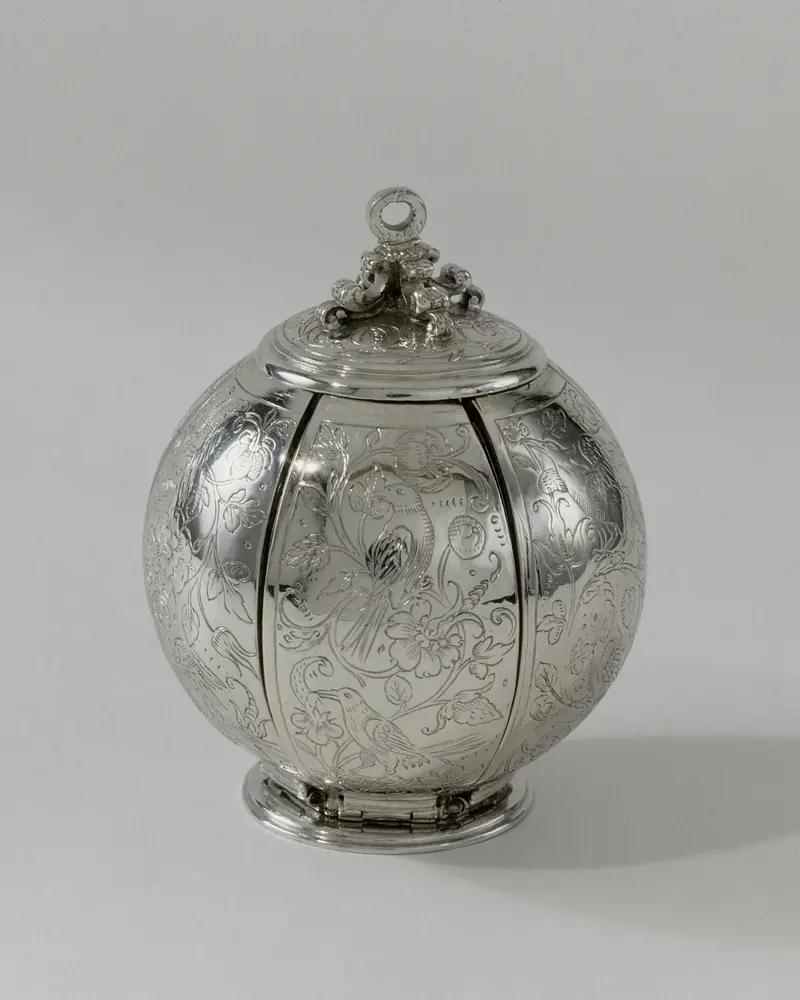
History of perfume: verified milestones from Egypt to the lab
Perfume has changed form three times: oils and smoke for millennia, alcohol from the 14th century, lab-made molecules from the late 19th. Here you will learn to place each milestone, from Egyptian kyphi to the glove-perfumers of Grasse, with the source that dates it.
By the club team ·
Perfume has changed form three times. For thousands of years it was an oil, a fat or a smoke; from the 14th century, alcohol began to carry scent; at the end of the 19th century, chemists learned to make scent molecules in the lab. Every date in this Class comes from a source you can open, because the history of perfume is full of dates copied from book to blog until they drift. When two good sources disagree, you get both.
How did people wear perfume in the ancient world?
In ancient Egypt, perfume was an oil or a smoke, not an alcohol-based spray. A study of the Mendesian perfume by Robert Littman, Jay Silverstein and colleagues, published in Near Eastern Archaeology in 2021, explains that perfumes and unguents used animal fat and vegetable oil as their base. Scent came from burning resins, barks and herbs, or from steeping them.
Kyphi, one of the few Egyptian perfume recipes that survive, appears in the Ebers papyrus: resins, berries and roots, ground, mixed and burned to scent the home and perfume clothing. Greek and Latin writers praise another Egyptian scent, the Mendesian, named after the city of Mendes in the Nile Delta, which Dioscorides describes as oil of balanos, myrrh, cassia and pine resin. Excavations at Tell Timai, ancient Thmouis, uncovered a perfumery, and the team recreated the Mendesian in the lab; it has since been exhibited at the Smithsonian.
When did alcohol enter perfume?
Alcohol entered perfume late. According to the same study, distilling alcohol was known from the 4th century BCE, but it was not used for perfume until the 14th century CE. That shift is what made possible the light, liquid perfume you know, and it set the stage for the fresh scents of the 18th century.
Where does eau de Cologne come from?
Eau de Cologne comes from Cologne, in Germany, where an Italian perfumer, Johann Maria Farina, made a fresh citrus scent in the early 18th century. The Farina house in Cologne, which still produces it to a secret recipe and keeps a fragrance museum on site, says he crafted the original Eau de Cologne there in 1709. It quotes his own description of the scent as being "with oranges, lemons, grapefruits, bergamot, cedrat, and the blossoms and herbs of my homeland".
Quotations of Farina vary, which is a good lesson in itself. Wikipedia's article on eau de Cologne cites a letter he wrote to his brother in 1708 about a fragrance "that reminds me of an Italian spring morning, of mountain daffodils and orange blossoms after the rain". Two versions, different fruit and flowers: when you read a quotation in a perfume history, ask where it comes from and who translated it.
The name later became a whole category. A typical eau de Cologne, the same article explains, blends citrus oils such as lemon, orange, bergamot and neroli into diluted ethanol, sometimes with lavender, rosemary or petitgrain. Its success prompted countless other sellers to use the name, the article says, and 4711, another famous Cologne scent, is named after its address at Glockengasse No. 4711.
Who were the glove-perfumers of Grasse?
The glove-perfumers of Grasse were leather and glove craftsmen who turned perfume into a trade of its own. UNESCO's listing of the skills related to perfume in Pays de Grasse says that since at least the sixteenth century, growing and processing perfume plants and creating fragrant blends developed there "in a craft industry long dominated by leather tanning".
The City of Grasse's heritage sheet on the Chiris hall, in French, gives the milestones. Perfumery in Grasse grew out of tanning in the 16th century and expanded in the 17th. In 1724, the glove-perfumers broke away from the tanners' guild, and their statutes were approved in 1729. Around 1750, cold enfleurage appeared, a way to capture the scent of the most delicate flowers: orange blossom, jasmine and tuberose.
In the 19th century, Grasse specialised in perfume raw materials and industrialised; the same sheet records that the Grasse industrialist Léon Chiris acquired the first patents for volatile-solvent extraction in 1894. UNESCO inscribed these skills on its Representative List of the Intangible Cultural Heritage of Humanity in 2018. The Class on Grasse, the perfume capital picks up the story from there, and the one on how fragrance is extracted explains enfleurage.
When was modern perfumery born?
Modern perfumery was born when chemistry entered the formula, at the end of the 19th century, and coumarin is the textbook case. Wikipedia's article on coumarin says it was first isolated from tonka beans in 1820 by A. Vogel of Munich, who at first mistook it for benzoic acid, and first synthesised in 1868 by the English chemist William Henry Perkin.
Perfumers soon put it to work. Wikipedia's article on the fougère family describes coumarin as a compound with a sweet, haylike scent, and calls Houbigant's Fougère Royale, composed by Paul Parquet, one of the first modern perfumes for its use of synthetic aromachemicals. The same page dates Fougère Royale to 1882, says it was discontinued in the 1950s and reintroduced by Houbigant in 2010, and adds that Aimé Guerlain's Jicky, released in 1889, combined synthetic vanillin and coumarin. The fougère family page explains what coumarin does there.
Fougère Royale is also a lesson in dates. The Osmothèque's collection page dates it to 1884 and counts it among the perfumes "that formed the bases of modern perfumery". The club keeps both years, each with its source. The archive in Versailles still lets you smell it, and the Class on the Osmothèque and its lost perfumes tells you how.
Perfume history at a glance
The table lists every milestone in this Class, what it changed and who dates it.
| Date | Milestone | What changed | Who dates it |
|---|---|---|---|
| Antiquity | Kyphi in the Ebers papyrus; the Mendesian | Perfume is an oil, a fat or a smoke | Mendesian study, 2021 |
| 14th century | Alcohol used for perfume | Scent can travel in a light liquid | Mendesian study, 2021 |
| 1708 or 1709 | Farina's eau de Cologne | Citrus oils in alcohol, a fresh style | Farina house; Wikipedia |
| 1724 and 1729 | Grasse glove-perfumers leave the tanners, then get their statutes | Perfume becomes its own trade | City of Grasse |
| Around 1750 | Cold enfleurage | The scent of fragile flowers can be captured | City of Grasse |
| 1868 | Perkin synthesises coumarin | A scent can be made in a lab | Wikipedia, coumarin |
| 1882 or 1884 | Fougère Royale, Houbigant | A synthetic molecule in a famous perfume | Wikipedia; Osmothèque |
| 1889 | Jicky, Guerlain | Synthetic vanillin and coumarin together | Wikipedia, fougère |
| 1894 | Léon Chiris's patents | Volatile-solvent extraction goes industrial | City of Grasse |
| 2018 | UNESCO inscription | The skills of Pays de Grasse are recognised | UNESCO |
Exercise: the ages of perfume on your kitchen table
This exercise lets you smell, with what is already in your kitchen, the successive forms of perfume: smoke, oil, citrus freshness, then a single molecule. Nothing goes on your skin; you smell everything above a pan or on a blotter, or failing that a strip of plain white paper.
- Smoke. In a dry frying pan over low heat, warm a pinch of coriander seeds or a small piece of cinnamon stick for about thirty seconds. Turn off the heat and smell above the pan. Write down what the heat woke up.
- Oil. Drop a strip of lemon or orange peel into a tablespoon of sunflower oil, cover it and wait an hour. Dip the tip of a blotter in the oil and smell it: that is maceration, the method the Egyptians already used.
- Citrus. Fold a fresh strip of peel over another blotter: the fine mist that bursts from the peel carries its scent. Smell straight away, then ten minutes later. That citrus freshness is what eau de Cologne put in a bottle.
- The molecule. If you bake with tonka beans, scrape one lightly and smell it: coumarin was first isolated from them. If not, smell a handful of dry hay, the kind sold for rabbits and guinea pigs, and keep "haylike" in mind.
- Line up your blotters in order and write three words for each. You now have, in shorthand, the whole story on one table.
Share what you smelled in the History, Bottles & Houses circle, where the club talks about old perfumes and their bottles.
Further reading
- Eau de Cleopatra: Mendesian perfume and Tell Timai (Littman, Silverstein, Goldsmith, Coughlin, Mashaly, Near Eastern Archaeology, 2021, author version) irep.ntu.ac.uk
- Farina, the world's oldest perfume house farina.org
- Eau de Cologne, Wikipedia en.wikipedia.org
- The skills related to perfume in Pays de Grasse, UNESCO ich.unesco.org
- Fiche patrimoine n°3 : Grasse, halle Chiris (City of Grasse, in French) ville-grasse.fr
- Coumarin, Wikipedia en.wikipedia.org
- Fougère, Wikipedia en.wikipedia.org
- The collection, Osmothèque osmotheque.fr
What members say
I did the exercise with a bitter orange my cousin sent from Seville. The peel folded over the paper was the strongest, the oil one softer and rounder. I like that the orange blossom is in Farina's letter.
My late husband's aftershave smelled of hay and lavender. Reading this, I wonder if that hay was coumarin. Is there any way to know?
Bev, without the bottle nobody can say for sure, but here's a way to explore it: 1) smell some dry hay or a tonka bean, as in step 4 2) then read the fougère family page 3) tell us whether it brings him back.
Glovers perfuming their hides makes perfect sense to me, a good hide fresh from the tannery is no rose garden. We should have had a few of those Grasse lads at the factory.
Coumarin was isolated from tonka beans by Vogel in 1820, and he first took it for benzoic acid [chemists get it wrong too, which comforts me]. I definately want to try the dry-pan step next to church incense.
More Classes
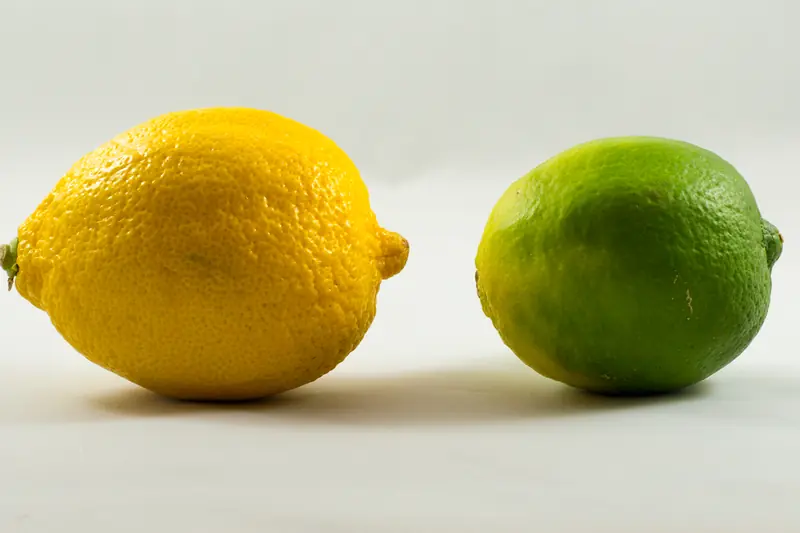
Class no. 15 · 7 min read
Fragrance allergens and IFRA: what the label really tells you
On a perfume sold in the European Union, the word "parfum" covers the whole formula, and only the allergens listed in the cosmetics regulation are named separately, above a set threshold. You will learn to read those names, date what the 2023 regulation added, and tell the law apart from the IFRA Standards, which never appear on the bottle.
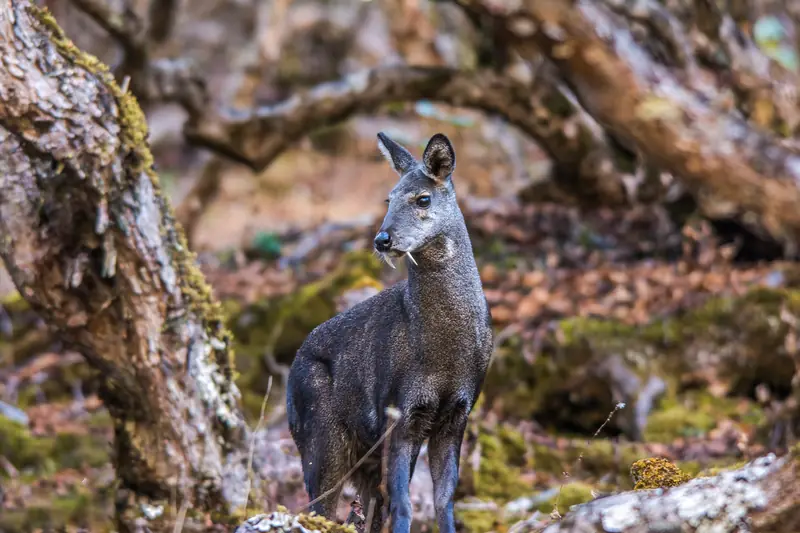
Class no. 16 · 6 min read
Animal notes in perfume: musk, ambergris and their substitutes
Musk, ambergris, civet and castoreum came from a musk deer, a sperm whale, a civet and a beaver, and perfumery has replaced nearly all of them with synthetic molecules since the late 19th century. You will learn where each material came from, which molecule took its place, and what "musk" means on a list of notes today.
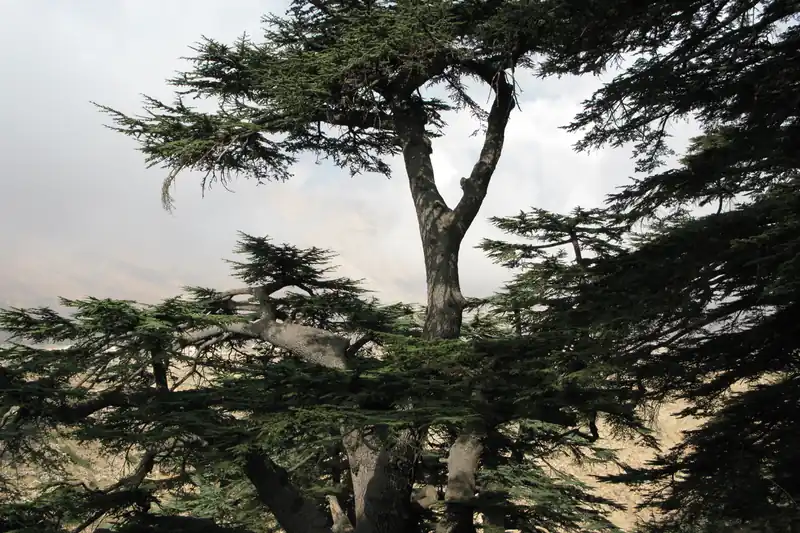
Class no. 17 · 8 min read
Precious woods: where sandalwood, oud and cedarwood really come from
Sandalwood, oud and cedarwood come from very different trees, and several are under pressure: Indian sandalwood is listed as vulnerable by the IUCN, every agarwood-producing species is covered by CITES, and Atlas cedar is endangered. You will learn where each wood comes from, what scarcity changes in a perfume, and what the words sandalwood, oud and cedar on a label can and cannot tell you.