Galbanum: the sharply green gum resin of Persian ferulas
Galbanum is a gum resin from Ferula plants of Iran and Central Asia, with an intense green smell and a hint of turpentine. Its arrival in modern perfumery is generally seen as the birth of the green fragrance family.
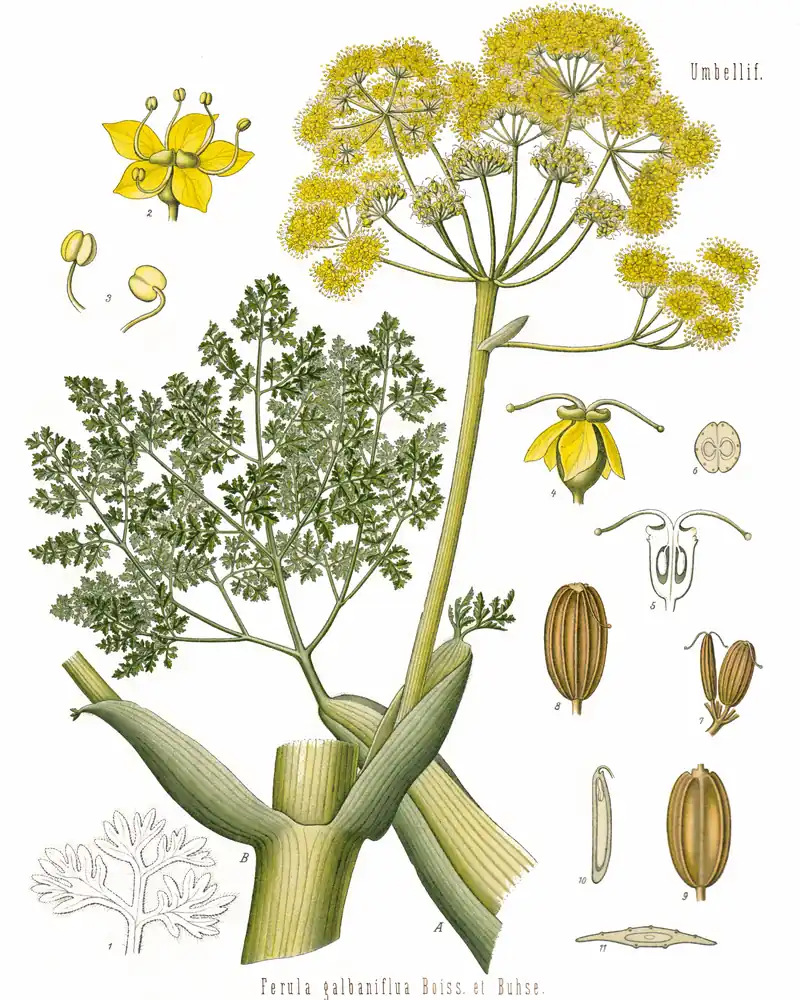
Where does galbanum come from?
Galbanum comes mainly from Ferula gummosa, a tall umbellifer in the Apiaceae family that grows on the slopes of northern Iran's mountain ranges. Wikipedia's galbanum article describes the raw material as irregular, translucent lumps or tears, light brown, yellowish or greenish-yellow. The French Wikipedia page on Ferula gummosa explains the harvest: the top of the root is exposed and a thin slice cut away, or the stem is incised.
Perfumers use galbanum as an essential oil, a resinoid or an absolute, the absolute being solvent-extracted from the gum. If these terms are new to you, our class on how fragrance is extracted walks through each one.
What does galbanum smell like?
Galbanum smells intensely green, with a turpentine edge. It opens bitter and acrid, then turns green, spicy, woody and balsamic. Diluted, it has been compared to pine, evergreens, green bamboo, parsley and green apple; the pine side comes from its pinene and limonene. The oil keeps a pine-like top note, while the resinoid leans woodier and more balsamic.
What does galbanum do in a perfume?
Galbanum is credited with launching the green family, a lighter, more modern take on the chypre built around cut grass and crushed leaves. Its absolute also acts as a base note, one of the few natural green materials that can. To hear what it contributes, smell it alongside bergamot and oakmoss, the backbone of a chypre.
What should you know about galbanum?
Galbanum is an ancient material: Exodus lists it among the ingredients of the consecrated incense of the Jerusalem Temple, together with frankincense. It is also frequently adulterated with pine oil, so a galbanum that smells mostly of pine deserves a second sniff.
Often paired with
Further reading
- Galbanum (Wikipedia) en.wikipedia.org
- Férule gommeuse (Wikipédia) fr.wikipedia.org
- Perfume (Wikipedia) en.wikipedia.org
Galbanum in the feed
lupe.pinonin Woods, Mosses & Roots · Santa Fe ·
Discovery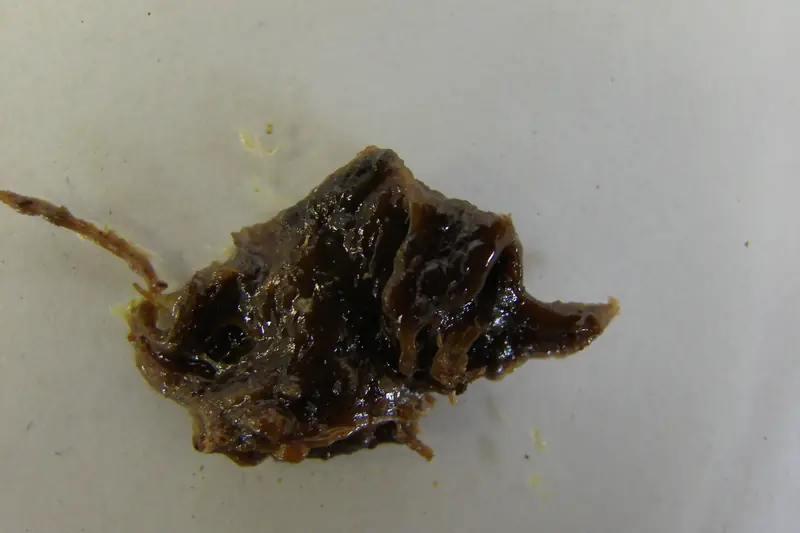
Galbanum and green chile roasting season
It's chile roasting season here and every parking lot smells of charred green peppers. A friend let me smell a strip of galbanum this weekend and it was that same green, raw and bitter, from before the roast. Without the smoke, of course.
juniper_jules Galbanum is my favorite green, sharper then cut grass, almost like turpentine on a rag.