Oakmoss: the lichen at the root of chypres and fougères
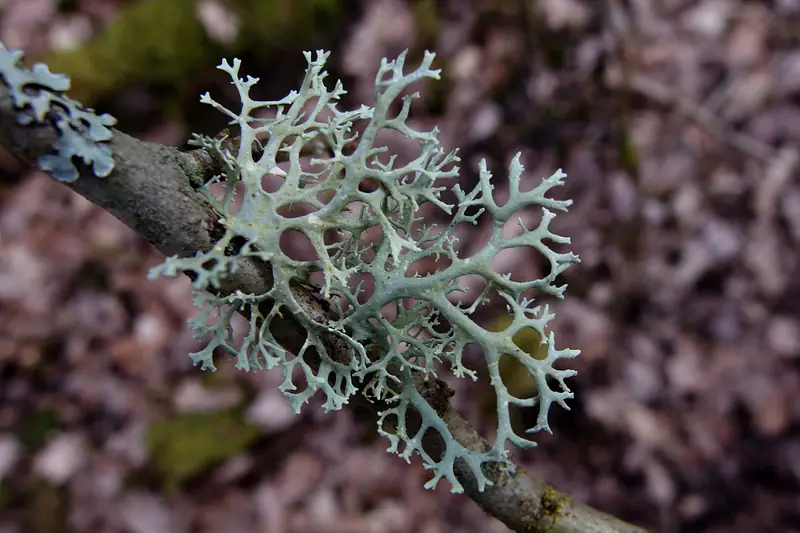
Oakmoss is a lichen (Evernia prunastri) that grows on tree bark and gives an extract with a woody, sharp and slightly sweet smell. It anchors the base of chypres and fougères, but EU law now strictly limits it.
Where does oakmoss come from?
Oakmoss is not a moss but a lichen, Evernia prunastri, found in many mountainous temperate forests across the Northern Hemisphere. It grows mainly on oak trunks and branches, but also on other deciduous trees and on conifers such as fir and pine. The profile of oakmoss explains that it is commercially harvested in South-Central Europe and usually exported to the Grasse region, where its fragrant compounds are extracted as absolutes and extracts.
What does oakmoss smell like?
Oakmoss has a distinct, complex smell, described as woody, sharp and slightly sweet. Where it grows matters: oakmoss growing on pines has a pronounced turpentine odour that is valued in certain perfume compositions. Its extracts are often used as fixatives, holding a perfume together as it dries down.
What does oakmoss do in a fragrance?
Oakmoss forms the base notes of many fragrances and is a key component of both the chypre family and the fougère. In the fougère accord born with Fougère Royale in 1882, it sits under lavender and coumarin. Chypres build on oakmoss with labdanum, patchouli and bergamot, a family that takes its name from François Coty's Chypre of 1917.
What should you know about oakmoss?
Oakmoss is one of the most tightly regulated materials in perfumery. Its extract has long been a labelled allergen in the EU, and Commission Regulation (EU) 2017/1410 banned atranol and chloroatranol, two natural components of oak tree moss and treemoss extracts, from cosmetics: products containing them could no longer be placed on the EU market from 23 August 2019. Its use is also highly restricted by International Fragrance Association rules, and many scents have been reformulated. The Class on allergens and IFRA explains these rules, and the one on the Osmothèque explains why some perfumes disappear.
Often paired with
Further reading
- Oakmoss en.wikipedia.org
- Fougère en.wikipedia.org
- Chypre (parfumerie) fr.wikipedia.org
- Commission Regulation (EU) 2017/1410 of 2 August 2017 amending Annexes II and III to Regulation (EC) No 1223/2009 on cosmetic products eur-lex.europa.eu
- Regulation (EC) No 1223/2009 of the European Parliament and of the Council of 30 November 2009 on cosmetic products eur-lex.europa.eu
Oakmoss in the feed
bev.bostonin Welcome to the Club · Boston ·
IntroductionMy late husband's aftershave started all this
I taught fourth grade in Boston for years and I'm retired now. I'm here because of my late husband's aftershave: lavender, something like hay, a little lemon. I'd love to understand what was in it.
harriet.hay Hello and welcome, bev.boston. What a lovely reason to be here. That hay smell is very often coumarin, the sweet hay note , and lavender with hay…
maeve.mossin Woods, Mosses & Roots · Galway ·
Snapshot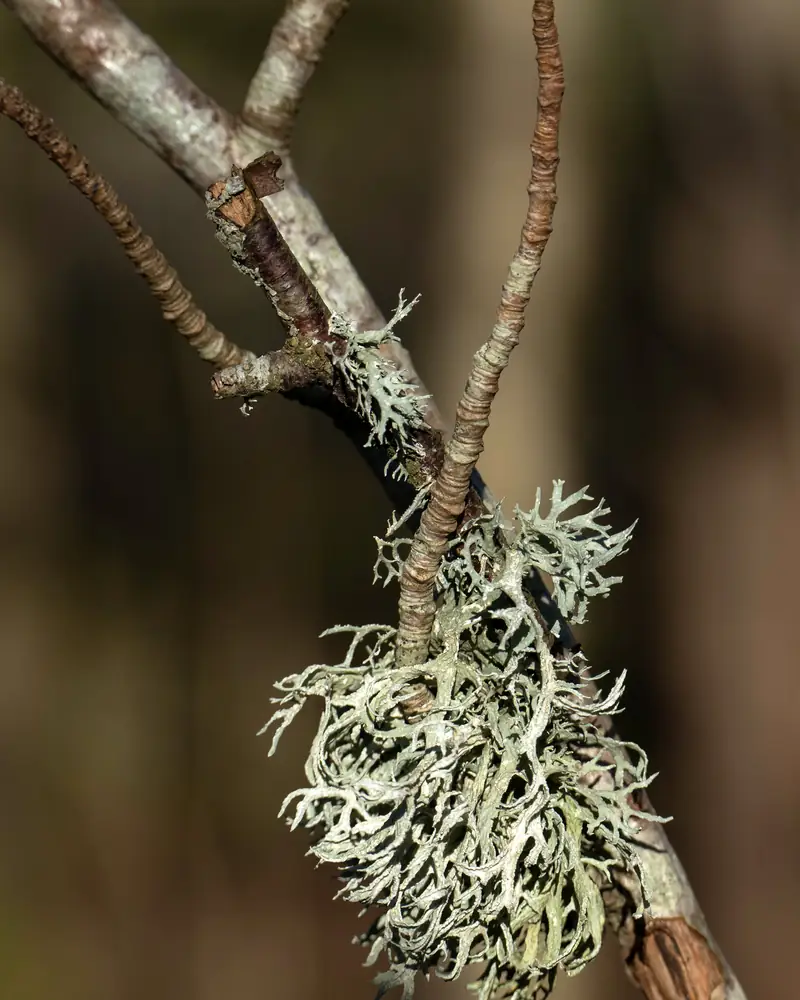
Bog road after the rain, wet stone and moss
Here's a thing. The rain stopped at four and I took the dog out the bog road before the light went and the whole place had turned up its volume, wet stone on the walls and the heather gone dark and that brown, almost sweet smell of the bog water in the…
cormac.bog Turf smoke and wet stone. That's my granny's road in Offaly, every word of it.
bev.bostonin History, Bottles & Houses · Boston ·
Memory
What was in my late husband's aftershave?
My late husband wore the same aftershave for forty years, a green bottle with lavender on top and something sweet like hay underneath. I'm trying to work out what that sweet part was.
dougie_newcastle Lavender and hay sounds like a fougère to me. Half the shipyard smelled like that on a Saturday night.
wren.and.mossin Woods, Mosses & Roots · Asheville ·
QuestionWhy is real oakmoss so restricted?
I keep reading that oakmoss is 'restricted' in perfume, and nobody says by whom or why. In my garden it's just a gray lichen on the oak branches that I'd never think twice about. What happened?
maeve.moss The oakmoss page goes through it and it's two sets of rules, the EU law on one side and the industry's own standards on the other, and the EU banned…
juniper_julesin Woods, Mosses & Roots · Portland ·
ReadingWhere oakmoss sits: two family maps compared
Studio notes: I read the club Class on the seven fragrance families and then the Wikipedia page on the fragrance wheel , back to back. The French list has oakmoss anchoring the fougères and the chypres, while the wheel has a subfamily called Mossy Woods. Less…
hamish_heather Same with whisky, every shop sorts its shelves its own way. You learn the map and try not to loose the plot.
wren.and.mossin Welcome to the Club · Asheville ·
Introduction
Asheville gardener who can name almost nothing
Gardener in Asheville, North Carolina. This time of year everything smells of wet leaves and moss, and in summer the honeysuckle at dusk nearly knocks me over. I notice all of it and can name almost none of it.
mags.lavender Welcome, wren. Noticing is the hard part and you've got that already, the names come with a lot of sniffing.
In the Classes
Class no. 1 · 6 min read
The seven fragrance families: how French perfumers sort scent
French perfumers sort fragrances into seven families, following the Société Française des Parfumeurs: citrus, florals, fougères, chypres, woody, ambers and leathers, each split into sub-families. You'll be able to place a scent on that map, translate it into the Fragrance Wheel used in shops, and spot where a family label stops helping.
Class no. 7 · 7 min read
The Osmothèque in Versailles: where lost perfumes are kept alive
The Osmothèque, a perfume archive in Versailles, holds 4,000 fragrances, 800 of them no longer sold, and remakes lost ones from their original formulas. Here is what it keeps, why perfumes vanish and how you can still smell them.
Class no. 15 · 7 min read
Fragrance allergens and IFRA: what the label really tells you
On a perfume sold in the European Union, the word "parfum" covers the whole formula, and only the allergens listed in the cosmetics regulation are named separately, above a set threshold. You will learn to read those names, date what the 2023 regulation added, and tell the law apart from the IFRA Standards, which never appear on the bottle.