Patchouli: the earthy leaf oil behind classic chypres
Patchouli is an essential oil steam-distilled from the dried leaves of Pogostemon cablin, a tropical member of the mint family, with a heavy, woody, earthy and balsamic smell. You mostly meet it in the base of chypre, woody and amber fragrances.
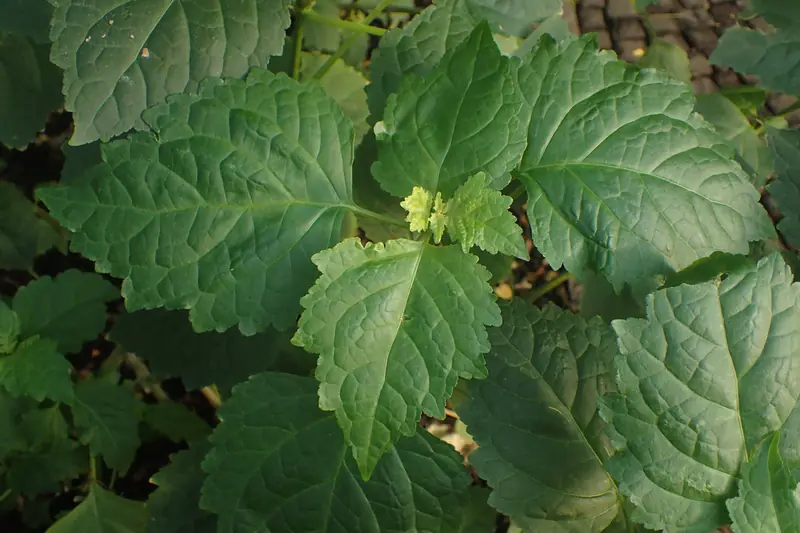
Where does patchouli come from?
Patchouli comes from Pogostemon cablin, a bushy perennial herb in the mint family (Lamiaceae) native to the islands of Southeast Asia. According to Wikipedia's article on patchouli, Indonesia produces over 90% of the world's patchouli oil, with the main commercial varieties coming from Sumatra and Sulawesi. The name probably comes from Tamil words for "green" and "leaf".
Patchouli oil is made by steam distillation of dried leaves and twigs. The cell walls first have to be broken down, by drying, light fermentation or steam scalding. Oils are often graded by their patchoulol content, the sesquiterpene alcohol that dominates the oil.
What does patchouli smell like?
Patchouli smells heavy, strong, woody, earthy, balsamic and spicy. The French Wikipedia entry on patchouli adds smoky, camphor-like, liqueur-like and even musty accents, and explains that the fresh oil is aged in casks for several months so it loses its bitterness.
What does patchouli do in a perfume?
Patchouli works as a base note. It is a cornerstone of the chypre family, the accord of bergamot, oakmoss and labdanum that Wikipedia's chypre article describes, adding that patchouli is often treated as indispensable there. It also brings depth to woody, leather and amber blends. Smell it next to oakmoss, labdanum and vetiver and you will hear how they lock together.
What should you know about patchouli?
Patchouli oil now has to be named on cosmetic labels in the EU: Commission Regulation (EU) 2023/1545 on fragrance allergens adds "Pogostemon Cablin Oil" to the list, above 0.001% in leave-on products and 0.01% in rinse-off products. The material also has a cultural story: patchouli oil and incense boomed in Europe and the US with the hippie movement of the 1960s and 1970s. Our class on fragrance allergens and IFRA standards shows you how to read those labels.
Often paired with
Further reading
- Patchouli (Wikipedia) en.wikipedia.org
- Patchouli (Wikipédia) fr.wikipedia.org
- Chypre (Wikipedia) en.wikipedia.org
- Commission Regulation (EU) 2023/1545 of 26 July 2023 amending Regulation (EC) No 1223/2009 of the European Parliament and of the Council as regards labelling of fragrance allergens in cosmetic products eur-lex.europa.eu
Patchouli in the feed
sinead.smokein Woods, Mosses & Roots · Limerick ·
QuestionIs patchouli a wood or a leaf?
First post here. Patchouli turns up in every woody list I read, but a lad at work swears it's a herb. Which is it?
harriet.hay Hello and welcome, sinead.smoke. You may both be a little bit right. Shout if you get stuck.