Petitgrain: the green, woody oil of bitter orange leaves
Petitgrain is the essential oil steam-distilled from the leaves and green twigs of the bitter orange tree, with a fresh, greenish, woody orange scent. It is a mainstay of colognes and the leafy counterpart of neroli.
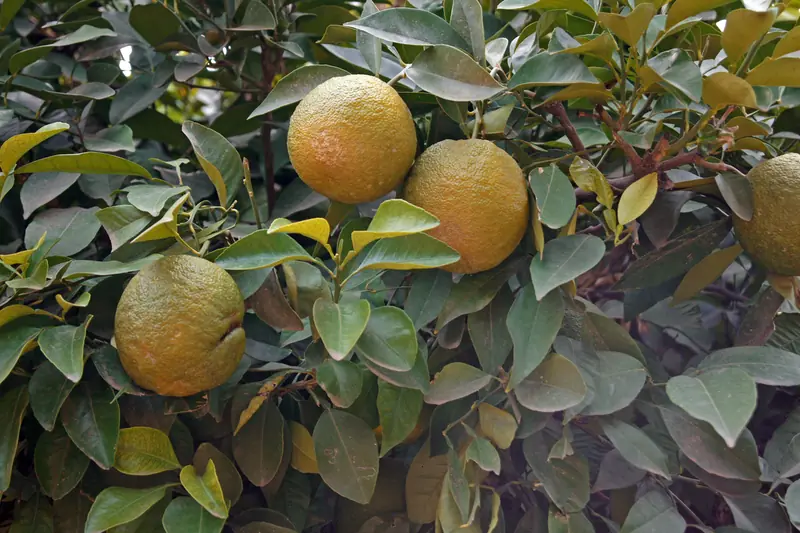
Where does petitgrain come from?
Petitgrain is extracted from the leaves and green twigs of the bitter orange tree, Citrus aurantium subsp. amara, by steam distillation; it is also called petitgrain bigarade. Its name, French for little grain, recalls that it was once distilled from the small unripe green fruits. As Wikipedia's article on petitgrain explains, Paraguay and France are its main producing regions, and the Paraguayan oil has the higher odour tenacity.
Paraguay's share is large: French Wikipedia's article on petitgrain credits it with 80% of world petitgrain bigarade, since steam distillation began there in 1876. Other citrus trees give their own versions, such as petitgrain mandarin, distilled from the leaves and branches of mandarin trees.
What does petitgrain smell like?
Petitgrain has a greenish, woody orange smell. It comes from the same species as neroli, distilled from the blossoms, and bitter orange oil, cold-pressed from the rind, yet it has its own characteristic aroma: sweet, fresh and floral over a tenacious woody, herbaceous base. Its scent rests on esters, mainly linalyl acetate, and alcohols such as linalool.
What does petitgrain do in a perfume?
Petitgrain is widely used in perfumery and is found in colognes. The history of eau de Cologne lists petitgrain, or orange leaf, among the oils a cologne can contain, next to citrus oils such as bergamot and neroli. It belongs to the citrus family, close to orange blossom, and soap makers have long valued its stability.
What should you know about petitgrain?
Always check which tree a petitgrain comes from. The International Fragrance Association (IFRA) Standard on citrus oils and furocoumarins notes that petitgrain mandarin oil typically contains about 50 ppm of phototoxic furocoumarins: not enough to require a restriction on its own, but it has to be counted when combined with other phototoxic citrus oils. Distilling petitgrain also yields a floral, smoky aromatic water known in French as eau de brout. The class on extraction methods explains how steam distillation works.
Often paired with
Further reading
- Petitgrain (Wikipedia) en.wikipedia.org
- Petit-grain (French Wikipedia) fr.wikipedia.org
- Eau de Cologne (Wikipedia) en.wikipedia.org
- IFRA Standard, Citrus oils and other furocoumarins containing essential oils (Amendment 49, 2020) ifrafragrance.org
Petitgrain in the feed
rafa_azaharin Citrus & Fresh · London ·
Scent diary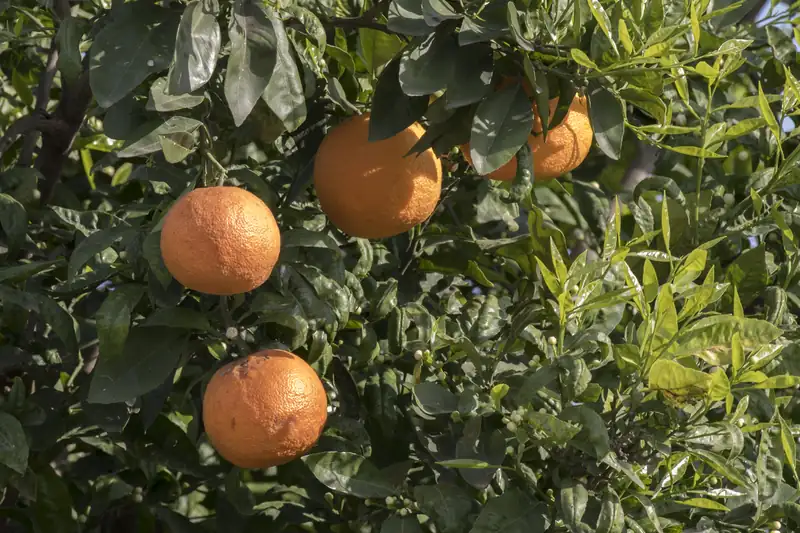
One bitter orange tree, three materials
Hello friends, in Seville the bitter orange trees line the streets, and right now the fruit is still hard and green. Reading the club pages I learned that one tree gives perfume three materials: neroli, distilled from the blossom , plus the absolute that…
hana.neroli Neroli is my favourite of the three. The same still gives orange flower water: Wikipedia's page on steam distillation calls that watery part a…
aoife_mintin Citrus & Fresh · Cork ·
QuestionIs every citrus oil pressed, or some distilled?
Question from a beginner: is every citrus oil pressed out of the peel, or do some get distilled?
dex_in_brooklyn it's all pressed, you squeeze the peel and the oil sprays out. you're overthinking it