Rhubarb: the tart stalk that smells of freshly cut grass
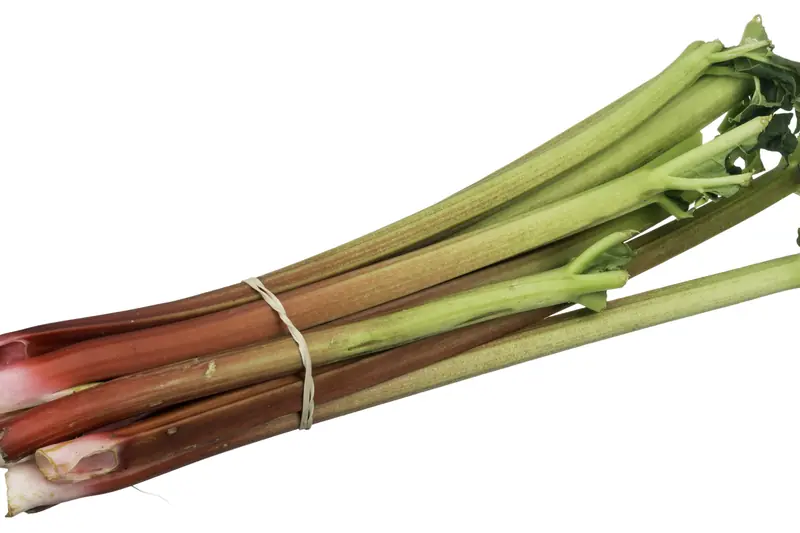
Rhubarb is a garden plant grown for its fleshy, tart leaf stalks, and raw rhubarb smells green and fresh. That freshness comes mainly from six-carbon compounds, the same family that gives cut grass its scent.
Where does rhubarb come from?
Rhubarb is the fleshy leaf stalk of species and hybrids of Rheum, in the family Polygonaceae. The precise origin of culinary rhubarb is unknown: Rheum rhabarbarum and Rheum rhaponticum were grown in Europe for folk medicine, and by the early 18th century they were grown as vegetables in England and Scandinavia. As Wikipedia's article on rhubarb notes, most modern cultivars are recognised as Rheum × hybridum, and forced rhubarb grown in heated greenhouses reaches markets in early spring.
What does rhubarb smell like?
Raw rhubarb smells green and fresh. A 2003 study of the volatile compounds of uncooked rhubarb stalks found that about 65% of them have six-carbon skeletons, mostly unsaturated aldehydes and alcohols, and that these compounds matter most to rhubarb's aroma. Once the stalk is cut, enzyme reactions reshape the mix, and (E)-2-hexenal and (E)-2-hexenol take the leading roles. The (Z)-3-hexenal present at first has an intense odour of freshly cut grass and leaves.
What goes well with rhubarb?
In the kitchen, rhubarb is classically paired with ginger, and often with cinnamon or nutmeg; in the United States it shares a pie with strawberries. On the molecular side, cis-3-hexen-1-ol, which smells like (Z)-3-hexenal but more softly, is used in flavours and perfumes. Rhubarb sits with the fresh notes of the citrus family, next to grapefruit.
What should you know about rhubarb?
Only the stalk is eaten. The large leaves contain high levels of oxalic acid and anthrone glycosides, which make them poisonous, and people were poisoned in Britain during the First World War after the leaves were wrongly recommended as food. To train your nose, smell a freshly cut raw stalk, then the same stalk cooked with sugar. The class on training your nose suggests simple exercises like this with what you have in the kitchen.
Often paired with
Further reading
- Rhubarb (Wikipedia) en.wikipedia.org
- Dregus M., Engel K.H., Volatile constituents of uncooked rhubarb (Rheum rhabarbarum L.) stalks, J Agric Food Chem 2003 (PubMed 14558774) pubmed.ncbi.nlm.nih.gov
- Cis-3-Hexenal (Wikipedia) en.wikipedia.org
Rhubarb in the feed
pip.rhubarbin Welcome to the Club · Wakefield ·
Introduction
Wakefield teaching assistant from the rhubarb triangle
I help out in a primary classroom in Wakefield, and the rhubarb triangle starts at the end of our road. Forced rhubarb grows in dark sheds and gets picked by candlelight, and the smell in there is sharp, pink and earthy all at once. My friends think I'm…
nell.wattle Rhubarb actually has its own page in the notes, rhubarb as a fresh, sour note , so you're in good company.
harriet.hayin Everyday Smells · Bristol ·
Question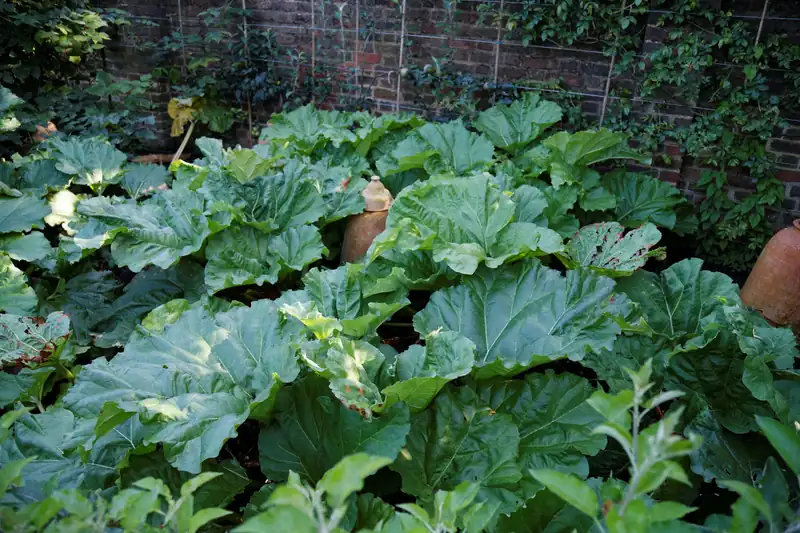
Last mow of the year: cut grass or hay?
Last mow of the year at the garden centre this morning, and I had a friendly argument with a colleague about the smell. To me fresh-cut grass is sharp and green, like a split stalk, while the clippings heaped by the compost bins smell sweeter by the…
dougie_newcastle It's coumarin, isn't it? That's the hay smell in an old fougère.
pip.rhubarbin Citrus & Fresh · Wakefield ·
Discovery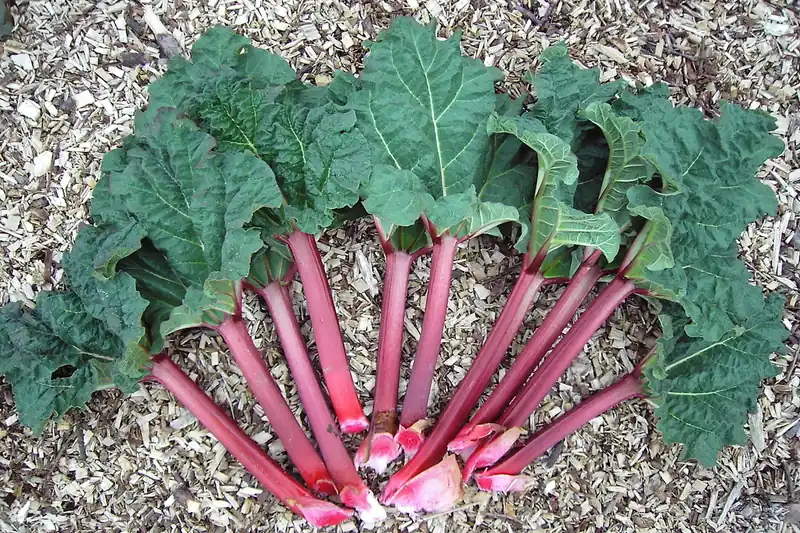
Raw rhubarb smells like a freshly mown pitch
Snapped one of the last stalks of rhubarb in the school garden and it smelled exactly like a freshly mown pitch. The club's rhubarb page explains that cut-grass smell : six-carbon compounds, the same family that gives cut grass its scent. Round here the…
juniper_jules Studio notes: that green is the smell of greenware drying on the shelf, wet and sharp. Anyone else?