Magnolia: a lemony white flower and how perfume captures it
Magnolia is a genus of trees with large fragrant flowers, and the southern magnolia's white blooms smell of lemon and citronella. In perfume, the note draws on Asian champaca flowers and on jasmonate molecules such as Hedione.
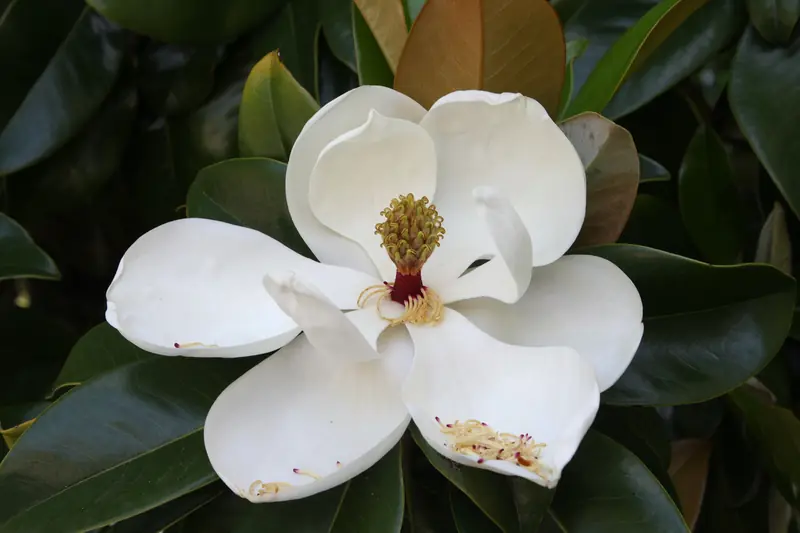
Where does magnolia come from?
Magnolia is an ancient genus that dates back to the Cretaceous, and its flowers are thought to have evolved for pollination by beetles, before bees existed. The southern magnolia, Magnolia grandiflora, is native to the coastal plain of the south-eastern United States, from Virginia to central Florida and west to East Texas. The botanical profile of the southern magnolia describes white flowers up to 30 cm across, with waxy petals.
What does magnolia smell like?
Southern magnolia flowers are lemon-citronella scented. The magnolias perfumers actually use come from Asia: champak (Magnolia champaca, formerly Michelia champaca) is known for its strongly fragrant cream to yellow-orange flowers, and an essential oil is extracted from the flowers of white champaca (Magnolia × alba), a hybrid grown across Southeast Asia and tropical East Asia.
How do perfumers recreate magnolia?
Magnolia accords lean on jasmonates. Methyl jasmonate occurs naturally in the scent of jasmine, tuberose and magnolia, and its synthetic relative, Hedione, was fully characterised and synthesised between 1957 and 1962 by Edouard Demole at Firmenich. According to the chemistry entry on methyl dihydrojasmonate, adding Hedione to a classic citrus structure in 1966 created a dewy, lemony magnolia-jasmine dimension without being directly floral. For flowers that give no essential oil, perfumers also use headspace analysis, which captures the air around a living bloom.
What should you know about magnolia?
Magnolia sits in the florals family, next to jasmine and tuberose, whose scents share the same jasmonates, and to Hedione, the molecule that brought that freshness into modern perfumery. Botanists now fold the former genus Michelia into Magnolia, which is why champak carries the magnolia name. The Class on natural versus synthetic explains how one molecule can stand in for a flower.
Often paired with
Further reading
- Magnolia grandiflora en.wikipedia.org
- Magnolia en.wikipedia.org
- Magnolia champaca en.wikipedia.org
- Magnolia × alba en.wikipedia.org
- Methyl dihydrojasmonate en.wikipedia.org
- Glossaire de la parfumerie fr.wikipedia.org
Magnolia in the feed
imogen.magnoliain Home Fragrance & Candles · Cambridge ·
Snapshot
One candle by the bath, rain on the skylight
Long day, hot bath, one magnolia candle on the windowsill and rain on the skylight. That's the whole evening.
jess.in.philly Is a real candle by the bath okay, or should I just go LED?
imogen.magnoliain Florals & Bouquets · Cambridge ·
Question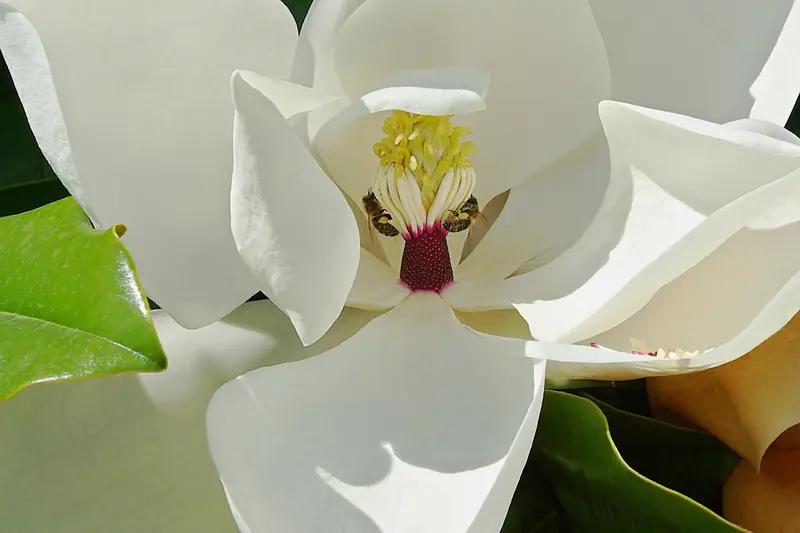
A lemony smell off the big college magnolia
The big evergreen magnolia against a college wall had one last flower today, huge and creamy. It smelled of lemon, almost like washing-up liquid but nice. Is that normal for magnolia?
ingrid_berlin Normal. The southern magnolia is lemon-citronella scented, the magnolia page says; perfume magnolia mostly comes from Asian champaca. Bright treble…
kasia.berlinin Florals & Bouquets · Berlin ·
QuestionWhy nobody can sell real lily of the valley oil
At home in Poland my grandmother had lily of the valley under the kitchen window, and in spring the whole room smelled of it. I wanted a little oil of it for a cloth in my bike workshop. A man at the flea market told me there is no real one, only imitation.…
ingrid_berlin True: the flower gives too little to extract for perfumery, so every lily of the valley note is rebuilt from synthetic molecules . You only ever hear…
imogen.magnoliain Wearing Fragrance · Cambridge ·
QuestionTold off at choir for rubbing my wrists
Told off at choir practice for rubbing my wrists together after spraying my magnolia scent. The soprano next to me says rubbing 'bruises' the perfume: real thing, or just choir gossip?
ingrid_berlin Not bruising. More like turning the treble up and then cutting it early: the warmth sends the top notes off first, the rest plays on.