Tuberose: Mexico's heady white flower, green then milky
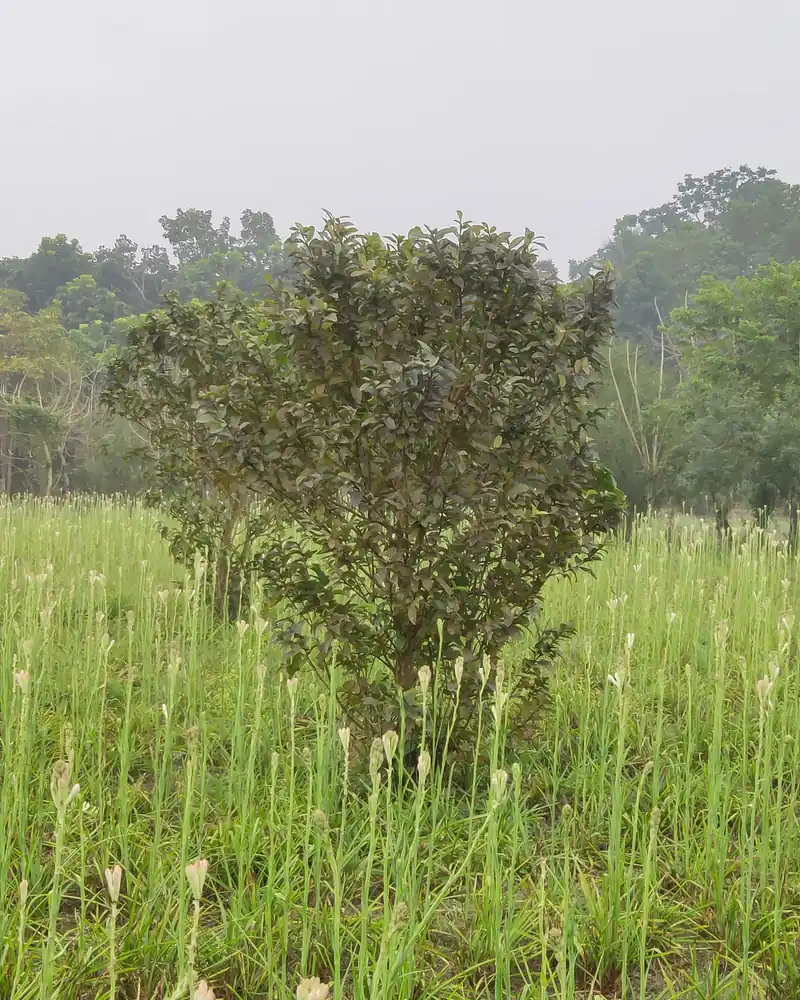
Tuberose is a Mexican plant whose flowers give a heady note, green at first and then milky, almost like coconut. Once captured by enfleurage and now by solvent extraction, it is overpowering enough to be used in moderation.
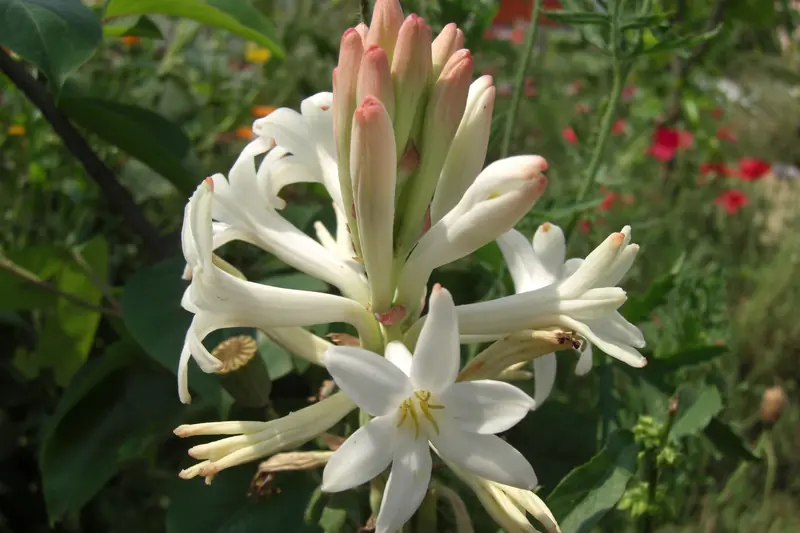
Where does tuberose come from?
Tuberose, Polianthes tuberosa, is a perennial in the family Asparagaceae, native to central and southern Mexico. It is no longer found in the wild, probably because the Aztecs domesticated it. As Wikipedia's article on Polianthes tuberosa recounts, it reached Europe in the 17th century, and Louis XIV had hundreds planted in the flower beds of the Grand Trianon at Versailles, rotating fresh pots in to keep the scent strong.
Tuberose was long one of the flowers that only enfleurage could capture: heat would destroy or denature its fragrant compounds. The article on enfleurage explains how odourless fat absorbed the scent before alcohol drew it out, a method now superseded by solvent extraction.
What does tuberose smell like?
Tuberose has an overwhelming, heady fragrance. French Wikipedia's article on tuberose describes the note as green at first, turning milky and sunny, with an effect that can recall coconut, and notes that cut flowers keep releasing their scent for more than 48 hours. Tuberose also contains methyl jasmonate, the floral molecule it shares with jasmine and magnolia.
What does tuberose do in a perfume?
Tuberose remains a popular note of the florals family, on its own or in mixed floral blends, but it must be used in moderation, because its essence is overpowering and can become sickly. Its history in perfume is long: Marie Antoinette's Sillage de la Reine combined tuberose with orange blossom, sandalwood, jasmine, iris and cedar. Its methyl jasmonate is the parent of Hedione, as the article on methyl dihydrojasmonate explains.
What should you know about tuberose?
Tuberose absolute is one of the valuable and expensive fragrance materials, alongside rose oil and jasmine absolute, according to the entry on absolutes in perfumery. In the language of flowers, tuberose stands for desire. The class on Grasse, the perfume capital tells the story of its cultivation in Provence.
Often paired with
Further reading
- Polianthes tuberosa (Wikipedia) en.wikipedia.org
- Enfleurage (Wikipedia) en.wikipedia.org
- Tubéreuse (French Wikipedia) fr.wikipedia.org
- Methyl dihydrojasmonate (Wikipedia) en.wikipedia.org
- Absolute (perfumery) (Wikipedia) en.wikipedia.org
Tuberose in the feed
ambrose_leatherin History, Bottles & Houses · Northampton ·
Discovery
Enfleurage sounds like dressing a hide
Right then. Reading the encyclopedia page on enfleurage : you spread fat on glass, lay flowers on it and keep replacing them until the fat is saturated, then wash that pomade in alcohol to get an absolute. Jasmine and tuberose were the key flowers, and the…
maeve.moss Fat that holds on to a flower and alcohol that coaxes it back out again. Grand find, Ambrose.
hamish_heatherin Florals & Bouquets · Edinburgh ·
ChallengeThree words, one flower: guess it
Aye, a wee game for a dreich weekend. I describe a flower in three words, you guess, and whoever gets it posts the next one. Folk who come into the shop play this with whisky and never loose interest. Mine: custard, rubber, sunshine.
dex_in_brooklyn custard and rubber is a weird combo but you're describing ylang-ylang, I'd bet my knives on it
shona.whinin Florals & Bouquets · Aberdeen ·
QuestionHow much jasmine still grows around Grasse?
I read more than I post here. I've been reading about Grasse and can't work out whether the jasmine in perfume still comes from there, or whether that's the postcard version. Does anyone know?
bev.boston I always assumed all of it does. Isn't that the whole point of Grasse?
first.sniffin Florals & Bouquets · Exeter ·
QuestionWhat do people mean by indolic white flowers?
Total beginner. I keep reading "indolic" about jasmine and other white flowers and I have no idea what it's supposed to smell like. Can anyone put it in normal words?
harriet.hay It's one of those words that gets used far more than it gets explained. The florals family page is a handy map while the words pile up.
frankie.incensein Florals & Bouquets · Chicago ·
ReadingEnfleurage: swapping flowers on a sheet of fat
Fun fact, with a source: in cold enfleurage, as Wikipedia's article on enfleurage describes it, fat was spread on glass, flowers were laid on it and replaced again and again until the fat was saturated. That scented fat, the pomade, was then washed in ethyl…
juniper_jules Fat drinking up scent sounds more like bisque drinking glaze then anything I'd call chemistry.
wren.and.mossin Florals & Bouquets · Asheville ·
Question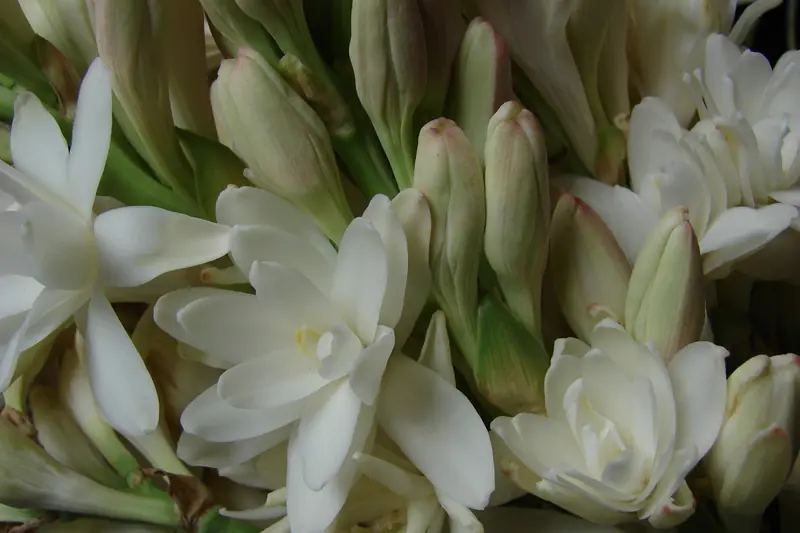
Is one tuberose stem meant to be this loud?
A neighbor gave me one stem of tuberose from her pots before the first frost. It's on the kitchen table and I can smell it from the porch. Green at first, and now almost like coconut milk. Is it always this loud?
mags.lavender Yes, the tuberose page calls it overwhelming and heady, and says perfume uses it in moderation for that reason. I had one in a vase once and it was…
In the Classes
Class no. 5 · 7 min read
How Fragrance Is Extracted: Distillation, Enfleurage and Absolutes
Perfumers draw scent from plants in five main ways (steam distillation, cold pressing, enfleurage in fat, volatile solvents and supercritical CO2), and each one yields a material with its own name. You'll be able to tell an essential oil from a concrete and an absolute, see why jasmine is kept away from steam, and try three of these methods with an orange in your kitchen.
Class no. 6 · 7 min read
Grasse, the Perfume Capital: Flowers, Skills and UNESCO Status
Grasse is the town in the south of France where growing perfume plants, processing them and composing fragrance have developed together since at least the sixteenth century, skills UNESCO inscribed on its intangible heritage list in 2018. You'll learn where its May rose, jasmine, tuberose and mimosa came from, what its perfume museum holds, and how to smell the town's palette at home.