Mimosa: the Australian wattle that bloomed in Grasse
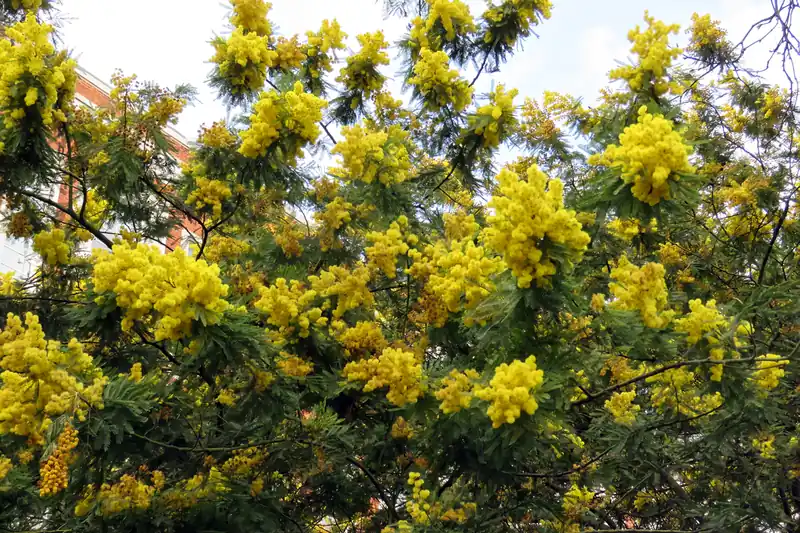
Mimosa in perfume is silver wattle (Acacia dealbata), an Australian tree whose fragrant yellow pompoms fill southern French gardens with scent from January. Its fragile flowers give an absolute that perfumers use to shade rose and jasmine accords.
Where does mimosa come from?
Perfumers' mimosa is Acacia dealbata, also called silver wattle or blue wattle, endemic to south-eastern mainland Australia and widely introduced in Mediterranean and warm temperate landscapes. As the botanical profile of Acacia dealbata notes, the florist trade sells its flowering shoots as mimosa, and the essence of the flowers, called mimosa or, in older texts, cassie, is used in perfumes.
In France, mimosa became part of the Grasse story. The history of Grasse lists wild mimosa among the rare local scents, with lavender, myrtle, jasmine, rose and orange blossom, that won the town its title of perfume capital of the world. The Class on Grasse, perfume capital follows that heritage.
How is mimosa absolute made?
Mimosa flowers are very fragile. They were first processed by cold enfleurage, which gave a concrete and then an absolute; today the same result comes from volatile solvents such as hexane or ethanol. The Class on how fragrance is extracted explains each step.
What does mimosa do in a fragrance?
Mimosa sits in the florals family. Its essence works mainly as a modifier in floral accords built on rose and jasmine. Older texts sometimes call it cassie, the name also given to the perfume distilled from the flowers of sweet acacia (Vachellia farnesiana), a related shrub widely used in European perfumery.
What should you know about mimosa?
Botanical names trip people up: perfumers' mimosa belongs to the genus Acacia, not to the genus Mimosa. Outside gardens, Acacia dealbata is listed as an invasive species in Portugal and Spain and classed as an environmental weed in New Zealand. In Italy, Albania, Russia and Georgia, its flowers are often given to women on International Women's Day.
Often paired with
Further reading
- Acacia dealbata en.wikipedia.org
- Grasse en.wikipedia.org
- Vachellia farnesiana en.wikipedia.org
- Acacia dealbata fr.wikipedia.org
Mimosa in the feed
nell.wattlein Florals & Bouquets · Melbourne ·
Scent diary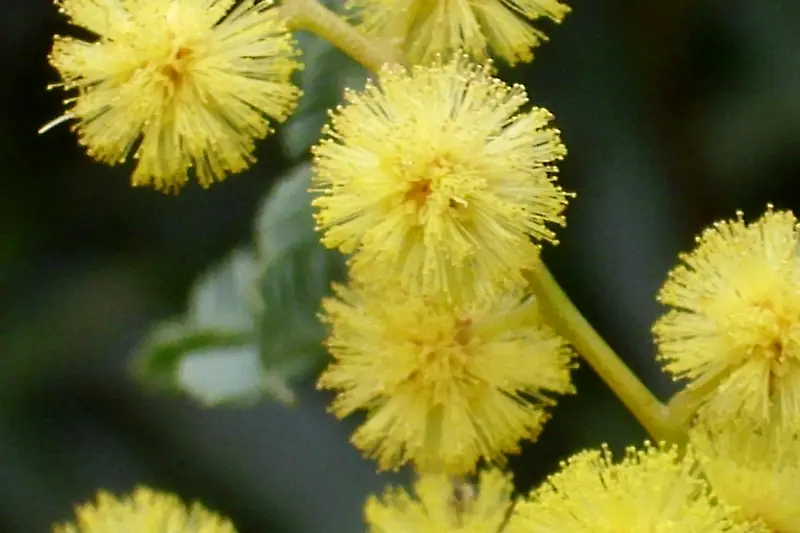
Our silver wattle is the mimosa perfumers mean
Okay, nerd moment: the silver wattle on our street has finished. A week of spring rain and the pompoms went from yellow to rusty brown. Perfumers' mimosa is this tree, Acacia dealbata, from south-eastern Australia, and not anything in the genus Mimosa. The…
aroha.rain Its on the weed list over here in NZ, the mimosa page says so too. Still smells sweet as on my walk to the ferry.
hamish_heatherin Florals & Bouquets · Edinburgh ·
ChallengeThree words, one flower: guess it
Aye, a wee game for a dreich weekend. I describe a flower in three words, you guess, and whoever gets it posts the next one. Folk who come into the shop play this with whisky and never loose interest. Mine: custard, rubber, sunshine.
dex_in_brooklyn custard and rubber is a weird combo but you're describing ylang-ylang, I'd bet my knives on it
nell.wattlein Wearing Fragrance · Melbourne ·
Snapshot
Melbourne spring: woody scent back in the drawer
Okay, nerd moment: while you lot are getting the scarves out, we're going the other way. The wattle has actually finished, the jasmine on the back fence is starting and the arvo sun has real warmth in it. My winter woody scent suddenly feels like a wool…
In the Classes
Class no. 6 · 7 min read
Grasse, the Perfume Capital: Flowers, Skills and UNESCO Status
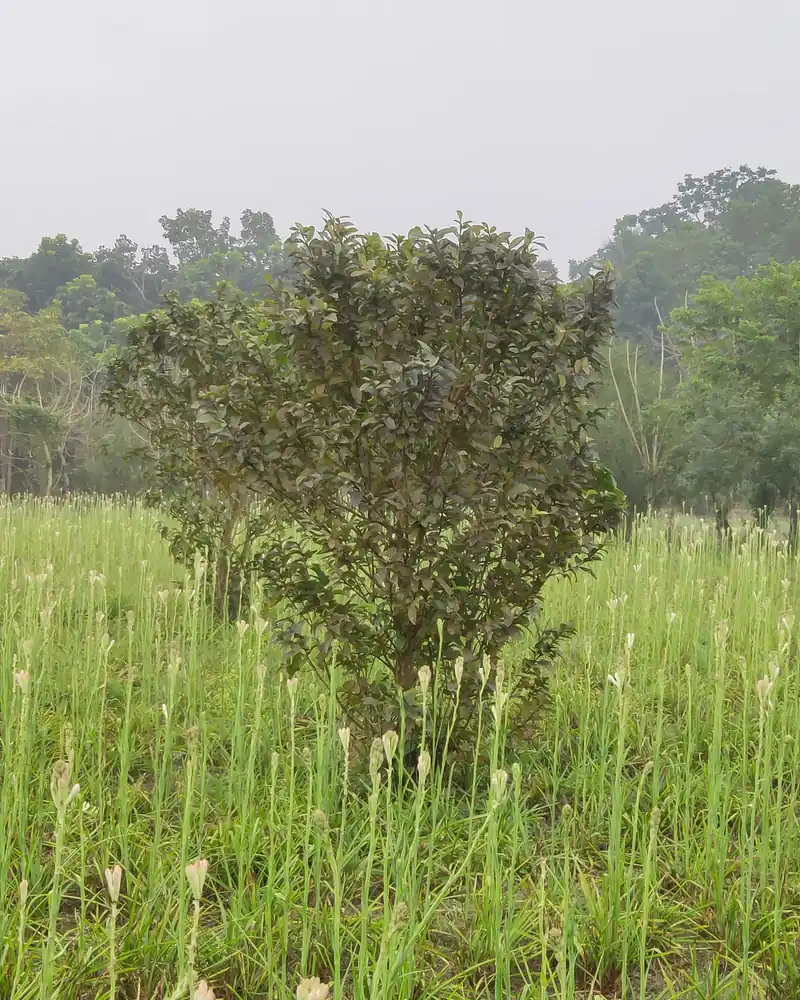
Grasse is the town in the south of France where growing perfume plants, processing them and composing fragrance have developed together since at least the sixteenth century, skills UNESCO inscribed on its intangible heritage list in 2018. You'll learn where its May rose, jasmine, tuberose and mimosa came from, what its perfume museum holds, and how to smell the town's palette at home.