Ylang-ylang: the perfume tree's flower, distilled in grades
Ylang-ylang is a tropical tree whose yellow flowers are steam-distilled into a rich, sweet, floral oil with notes of rubber and custard and hints of jasmine and neroli. The oil is collected in grades, and much of it comes from the Comoros and Madagascar.
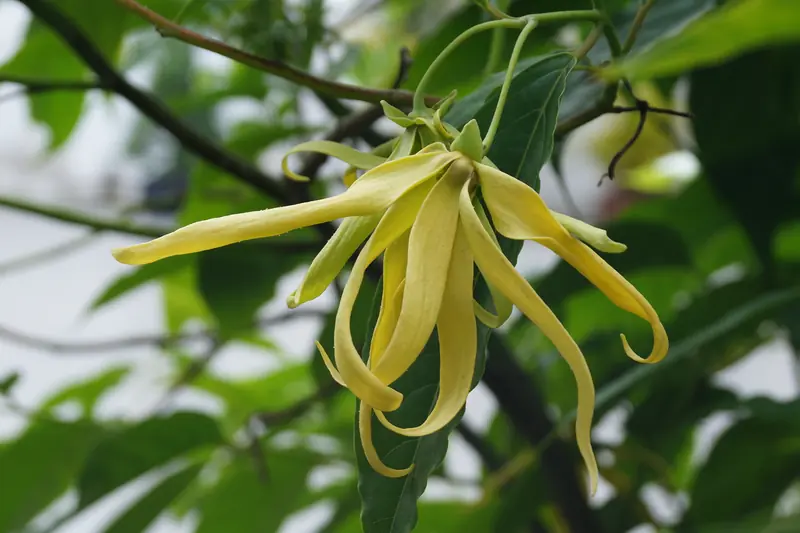
Where does ylang-ylang come from?
Ylang-ylang, Cananga odorata, is a fast-growing evergreen tree in the custard apple family, native to areas from Indochina to northeastern Australia and introduced to many other regions; in English it is also called the perfume tree. As Wikipedia's article on Cananga odorata notes, ylang-ylang oil made up 29% of the Comoros' annual exports in 1998, and Madagascar also grows and exports it.
The oil is obtained by steam distillation of the flowers and separated into grades, extra, 1, 2 or 3, according to when each fraction is collected. French Wikipedia's article on ylang-ylang adds that a distillation lasts 12 to 20 hours, that the finest fractions go to luxury perfumery, and that about 100 kg of flowers give 2 kg of oil.
What does ylang-ylang smell like?
Ylang-ylang smells rich and deep, with notes of rubber and custard, brightened by hints of jasmine and neroli; it is often described as heavy and sweet, with a slightly fruity floral scent. Its aroma has also been summed up as sweet, floral, balsamic, green, spicy, animal, woody, waxy and leathery.
What does ylang-ylang do in a perfume?
Ylang-ylang is one of the most extensively used natural fragrances in the perfume industry, a member of the florals family. It blends well with most floral, fruit and wood scents, which makes it at home beside jasmine, rose or sandalwood, and it often goes into soap. The class on extraction methods explains fractional distillation.
What should you know about ylang-ylang?
Ylang-ylang extracts are restricted. The International Fragrance Association (IFRA) Standard for ylang-ylang extracts sets maximum levels because of a risk of skin sensitisation, from 0.039% to 5.1% of the finished product depending on the product category. Under EU Regulation 2023/1545, ylang-ylang flower oil and extract must be listed as Cananga Odorata Oil/Extract above 0.001% in leave-on cosmetics.
Often paired with
Further reading
- Cananga odorata (Wikipedia) en.wikipedia.org
- Ylang-ylang (French Wikipedia) fr.wikipedia.org
- IFRA Standard, Ylang ylang extracts (Amendment 49, 2020) ifrafragrance.org
- Commission Regulation (EU) 2023/1545 of 26 July 2023 (labelling of fragrance allergens in cosmetic products) eur-lex.europa.eu
Ylang-ylang in the feed
hamish_heatherin Florals & Bouquets · Edinburgh ·
ChallengeThree words, one flower: guess it
Aye, a wee game for a dreich weekend. I describe a flower in three words, you guess, and whoever gets it posts the next one. Folk who come into the shop play this with whisky and never loose interest. Mine: custard, rubber, sunshine.
dex_in_brooklyn custard and rubber is a weird combo but you're describing ylang-ylang, I'd bet my knives on it