Myrrh: the bittersweet balsamic resin of Commiphora trees
Myrrh is a gum resin gathered from small thorny trees of Arabia and the Horn of Africa, with a warm, balsamic, sweet smell and a bitter edge. Perfumers use it in amber compositions, next to rose and the other classic resins.
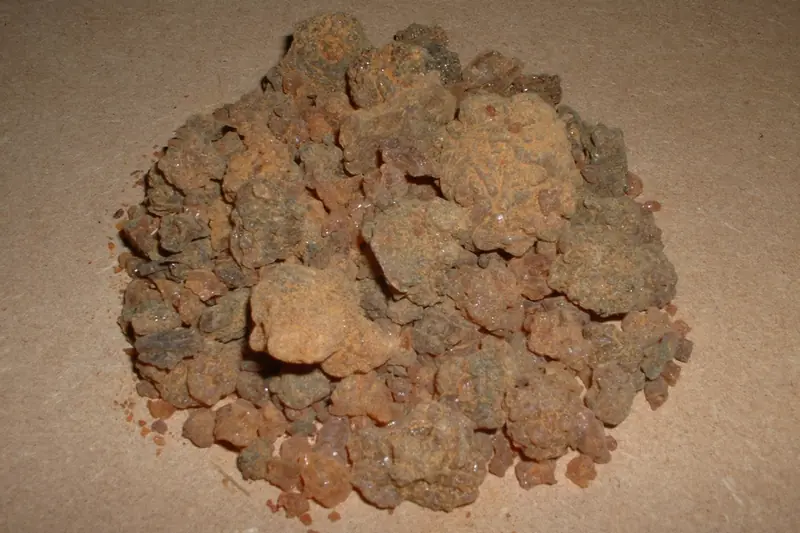
Where does myrrh come from?
Myrrh comes from several thorny trees of the genus Commiphora, mainly Commiphora myrrha, native to Somalia, Oman, Yemen, Eritrea, the Somali Region of Ethiopia and parts of Saudi Arabia, according to Wikipedia's article on myrrh. Harvesters cut the bark again and again so the tree bleeds a waxy gum, which hardens into glossy yellowish lumps and darkens as it ages.
Myrrh was traded across the ancient world and burned as incense. The Egyptian and Greek recipes for kyphi, a compound incense, already blended it with honey, wine, raisins and juniper berries.
What does myrrh smell like?
Myrrh smells warm, resinous and sweet, with a bitter undertone. The IFRA Fragrance Ingredient Glossary lists myrrh oil, absolute, CO2 extract and resinoid with amber as the primary descriptor, followed by balsamic and sweet. IFRA defines amber as a blend of warm, woody and sweet notes with a rich, comforting character. Even the word myrrh goes back to a Semitic root meaning bitter.
What does myrrh do in a perfume?
Myrrh belongs with the amber fragrances, once called orientals, where it sits beside the other resins perfumery relies on. Wikipedia's overview of perfume names labdanum, frankincense, myrrh, balsam of Peru and benzoin as the most common ones. The French Wikipedia entry adds that myrrh heightens the sensuality of rose notes, and the ancient kyphi recipes paired it with cinnamon.
What else should you know about myrrh?
- Other Commiphora species give related resins sold under their own names: opopanax, bdellium and balm of Gilead.
- Sweet cicely, Myrrhis odorata, is also called myrrh, but it is a garden herb with no link to the resin.
- For the wider story of ancient aromatics, read the Class on the history of perfume in verified milestones.
Often paired with
Further reading
- Myrrh en.wikipedia.org
- Kyphi en.wikipedia.org
- IFRA Fragrance Ingredient Glossary (April 2020 edition) ifrafragrance.org
- Perfume en.wikipedia.org
- Myrrhe (Wikipédia en français) fr.wikipedia.org
- Cinnamon en.wikipedia.org
Myrrh in the feed
lupe.pinonin Ambers, Spices & Gourmands · Santa Fe ·
Discovery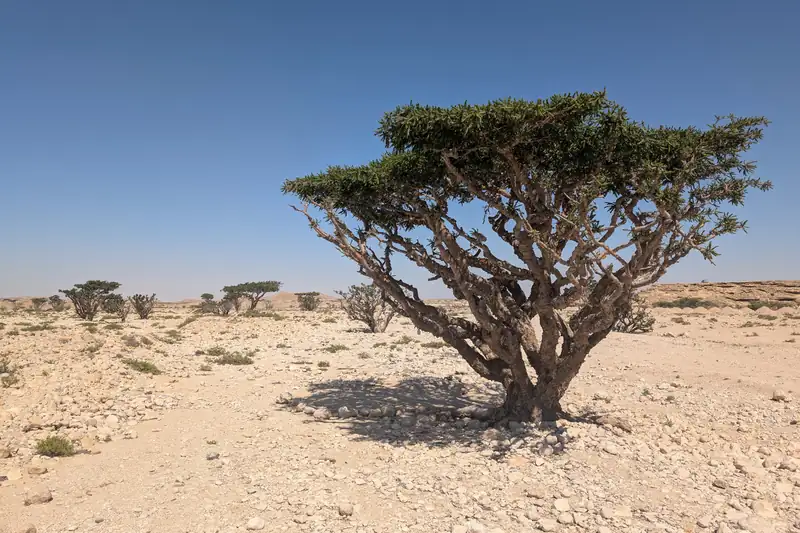
Frankincense tears smell different before you light them
A neighbour back from a trip gave me a little bag of frankincense tears. I only knew it as church smoke. Unlit, a tear smells like lemon peel and pine sap, nothing smoky at all. I warmed one on a tin lid over the stove and the church came straight back.
frankie.incense Fun fact: the first perfume-maker anyone can name is Tapputi, recorded on a Mesopotamian cuneiform tablet dated 1200 BCE [I definately want to know…