Ambergris: the sperm whale concretion that fixes a perfume
Ambergris is a waxy concretion formed in the gut of the sperm whale that, after months or years at sea, turns sweet, earthy, marine and animalic. Perfumers prized it as a fixative before synthetic ambroxide replaced it in most formulas.
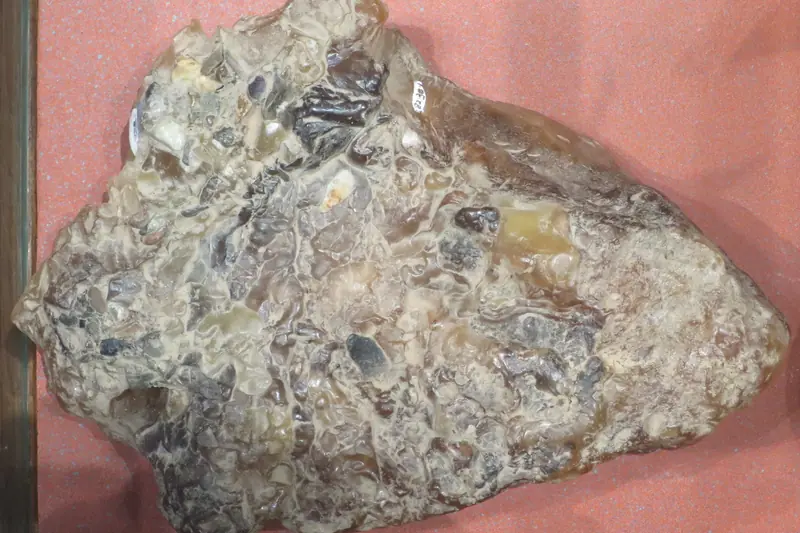
Where does ambergris come from?
Ambergris forms from a secretion of the bile duct in the intestines of the sperm whale, and turns up floating at sea or washed ashore, says Wikipedia's article on ambergris. Freshly expelled, it is pale, soft and smells faecal. Months to years of sunlight and oxidation in the ocean harden it into dark grey, waxy lumps with a far more pleasant smell.
The change is chemical. Ambrein, a nearly odourless terpenoid in ambergris, breaks down through oxidation into ambroxide and ambrinol, the main odour components of the mature material.
What does ambergris smell like?
Mature ambergris smells sweet, earthy, marine and animalic at once, often compared to a richer, smoother isopropyl alcohol without the sting. The French Wikipedia entry adds woody, dry, balsamic, floral and tobacco-like facets. Perfumers work with it as an alcohol tincture, which the IFRA Fragrance Ingredient Glossary files under amber, with sweet and mossy nuances.
What does ambergris do in a perfume?
Ambergris is a fixative: it lets a scent last much longer, lifts more fleeting materials and typically forms a base note. The Dutch merchant Jan Huygen van Linschoten already described it combined with musk, civet and benzoin. Rare and costly, it has mostly given way to synthetic ambroxide, better known as Ambroxan. It belongs to the amber family.
What else should you know about ambergris?
- Ambergris that a sperm whale has excreted naturally counts as a waste product and is not covered by CITES, yet trading it is banned in the United States, Australia and India and legal in France, the United Kingdom and Switzerland.
- In perfumery, amber also names a family of warm scents built on ambergris or labdanum, often with vanilla and tonka bean.
- The Class on animal notes and their substitutes explains why perfumery replaced ambergris, musk and castoreum.
Often paired with
Further reading
- Ambergris en.wikipedia.org
- Ambre gris (Wikipédia en français) fr.wikipedia.org
- IFRA Fragrance Ingredient Glossary (April 2020 edition) ifrafragrance.org
- Perfume en.wikipedia.org
Ambergris in the feed
gus_saltmarshin Welcome to the Club · Auckland ·
Introduction
Auckland boatbuilder wondering how perfume does the sea
I build boats in Auckland, so my days are kauri gum, varnish and spray off the harbour, not exactly floral. What I really want to know is how a perfume does the sea, because nothing I've smelled has got it right yet.
petey_pepper Isn't the sea smell in perfume made from whale vomit? I read that somewhere.
ash.and.emberin Woods, Mosses & Roots · Calgary ·
Discovery
Labdanum, sticky like a glove by the stove
Smelled labdanum for the first time at a friend's place. Thick, dark, sweet, a bit like a leather glove left too close to the woodstove. Nothing like the smoke I know from calls.
ambrose_leather A good hide gone too warm by the stove. I would of known that smell anywhere.
ingrid_berlinin Ambers, Spices & Gourmands · Berlin ·
Scent diaryAmbroxan on a blotter, all bass and no treble
A friend gave me a blotter dipped in Ambroxan. Dry wood, a little salt, no top at all, only a low bass line, and the next evening the strip is still humming. I wanted to smell this since a long time. The club's page on Ambroxan and how it clings has the…
frankie.incense Ambroxide, sold as Ambroxan, is made from sclareol, a component of clary sage oil , so your whale-ish bass line definately starts in a field of sage…
kemi.cocoain Ambers, Spices & Gourmands · London ·
QuestionAmber and ambergris, are they the same thing?
Daft question from a primary teacher. Half the threads in here say amber and the other half say ambergris. Is the amber in a perfume the same thing as the whale stuff, or something else entirely? My Year 4s did whales today and now I can't stop wondering.
dex_in_brooklyn ok so I always figured amber was just ambergris with the gris chopped off, like how we say mise for the whole station. your welcome to correct me
In the Classes
Class no. 16 · 6 min read
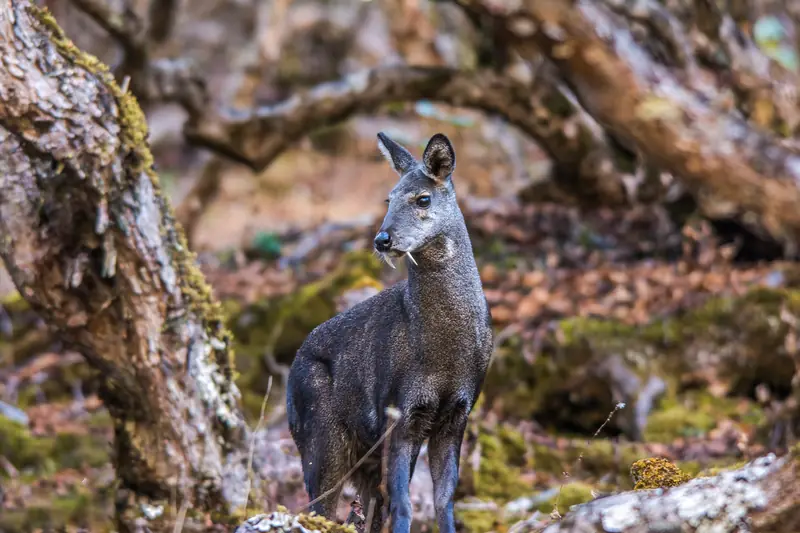
Animal notes in perfume: musk, ambergris and their substitutes
Musk, ambergris, civet and castoreum came from a musk deer, a sperm whale, a civet and a beaver, and perfumery has replaced nearly all of them with synthetic molecules since the late 19th century. You will learn where each material came from, which molecule took its place, and what "musk" means on a list of notes today.