Tonka bean: the South American seed packed with coumarin
Tonka bean is the seed of a South American tree, Dipteryx odorata, whose coumarin gives it a sweet, hay-like smell with hints of vanilla and almond. In perfume it appears in amber and gourmand fragrances.
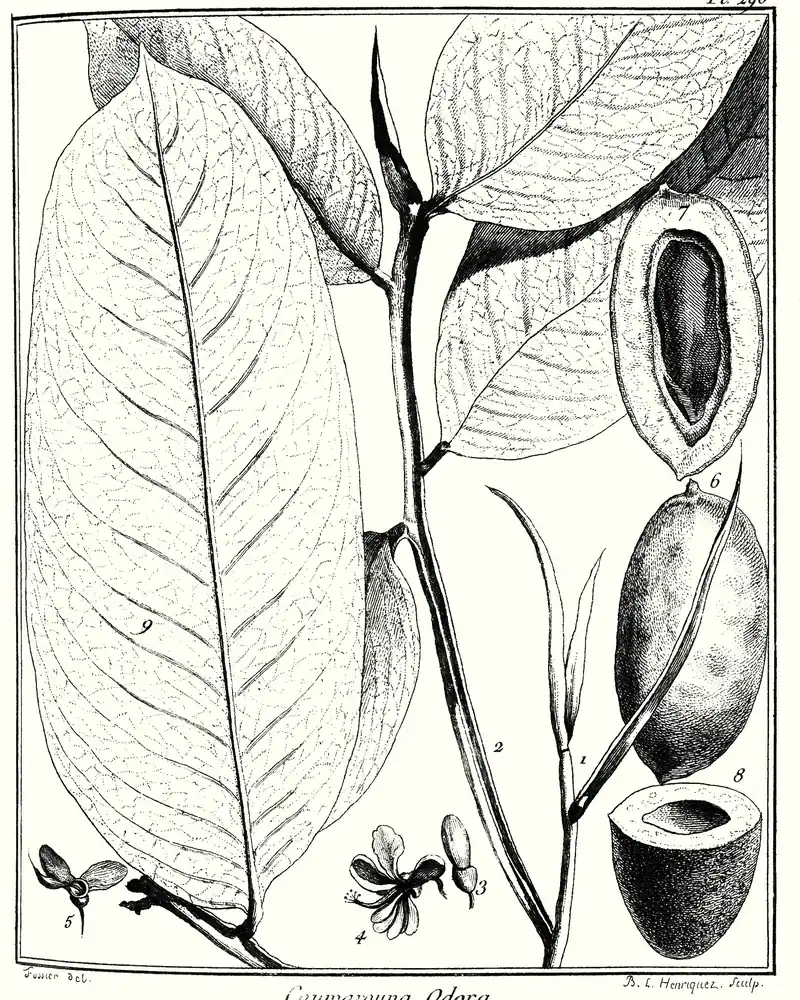
Where does tonka bean come from?
Tonka bean is the seed of Dipteryx odorata, a tree in the pea family (Fabaceae) native to northern South America; despite the name, it has nothing to do with Tonkin. Wikipedia's article on Dipteryx odorata describes black, wrinkled seeds with a smooth brown interior, and names Venezuela and Nigeria as the main producers, with Brazil and Colombia also growing it.
What does tonka bean smell like?
Tonka bean has a strong fragrance close to sweet woodruff, thanks to coumarin, which usually makes up 1 to 3% of the seed and occasionally up to 10%. Its flavour has been described as a mix of vanilla, almond, clove, cinnamon and amaretto. The French Wikipedia page on coumarin sums up the molecule's smell as freshly cut hay.
What does tonka bean do in a perfume?
Tonka bean appears in amber fragrances, where it partners labdanum and vanilla, and of gourmands, next to coumarin. Its story runs through coumarin: the molecule was first isolated from tonka beans in 1820 by A. Vogel, synthesised in 1868 by William Henry Perkin, and used in 1882 in Houbigant's Fougère Royale. Compare the bean with pure coumarin and with vanillin to hear what the whole seed adds.
What should you know about tonka bean?
Tonka's coumarin is regulated. The IFRA Standards restrict coumarin, with a maximum concentration for each product category, and list "Tonka bean camphor" among its synonyms. In the United States, the FDA has considered foods containing tonka beans adulterated since 1954, and many governments control it as a food additive. Tonka is still used to flavour some pipe tobaccos.
Often paired with
Further reading
- Dipteryx odorata (Wikipedia, redirected from Tonka bean) en.wikipedia.org
- Coumarine (Wikipédia) fr.wikipedia.org
- Coumarin (Wikipedia) en.wikipedia.org
- Perfume (Wikipedia) en.wikipedia.org
- The complete IFRA Standards, up to and including the 51th Amendment (January 2024) ifrafragrance.org
Tonka bean in the feed
teddy.tonkain Ambers, Spices & Gourmands · Austin ·
DiscoveryTonka and coffee in the same breath
Smelled a tonka bean straight after cupping this morning and it has the same toasted almond thing as a fresh roast!! Mind blown. Back to lurking.
kemi.cocoa Toasted almond is how I'd describe tonka too. Put it next to a vanilla pod and the almond gets even louder.
dex_in_brooklynin Learning to Smell · New York ·
Discovery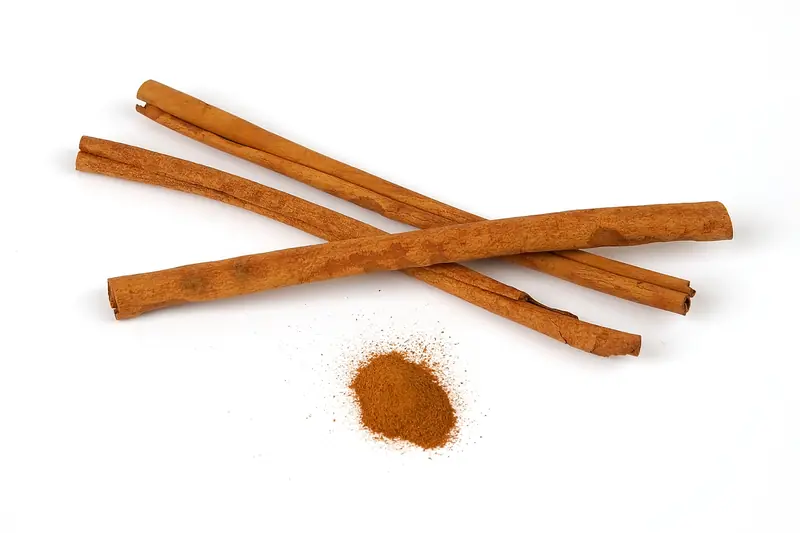
Cassia and Ceylon cinnamon don't smell the same
ok so we got ceylon cinnamon in at work next to the usual cassia. side by side at my station the cassia is sweeter, almost like a cookie, the ceylon is lighter and kind of citrusy. your telling me these are both just cinnamon?
nell.wattle The Wikipedia page on coumarin lists cassia cinnamon as one of the places it's found, along with tonka beans and sweet woodruff, and describes it as…
ambrose_leatherin Ambers, Spices & Gourmands · Northampton ·
Memory
Tonka beans and the foreman's pipe tobacco
Right then. Our foreman in the clicking room smoked a pipe at break, and his tobacco smelled of hay and marzipan, nothing like my dad's roll-ups. I never knew why until my granddaughter put a tonka bean under my nose on Sunday. Same smell, near enough. The…
bev.boston My late husband's aftershave had that hay and almond smell. Now I have a word to look for.
frankie.incensein History, Bottles & Houses · Chicago ·
Exercise
Resin, rose, tonka: a perfume timeline you can smell
Fun fact, with a source: the encyclopedia's history of perfume names Tapputi, recorded on a Mesopotamian cuneiform tablet dated 1200 BCE, as an early perfume maker, and credits Avicenna with distilling oils from flowers, starting with rose. So here's a little…
carys.cardiff Frankincense: church, candle wax, lemon peel. Rose water: Turkish delight, my nan's soap. Tonka: hay, almond, warm biscuits.