Cedarwood: the woody oil distilled from cedars and junipers
Cedarwood oil is a woody oil distilled from true cedars such as the Atlas cedar, but mostly from junipers and cypresses. Eastern red cedar, one of its sources, is the wood that once lined clothes chests and made pencils.
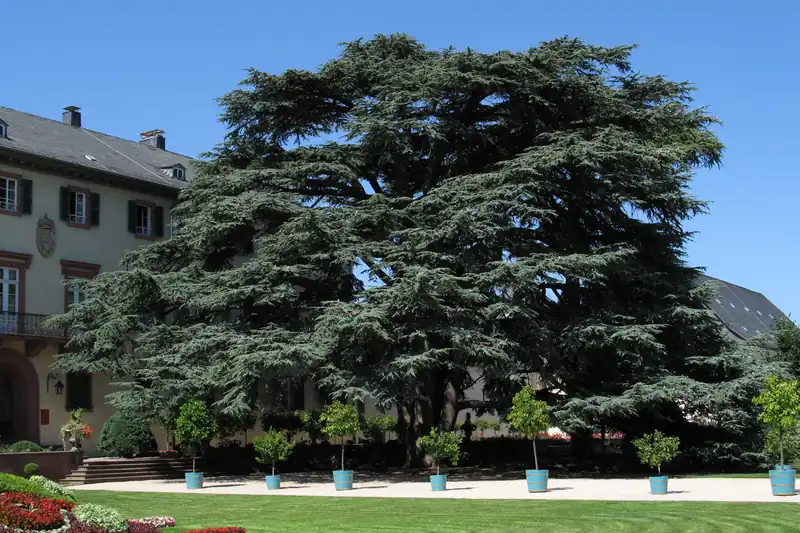
Where does cedarwood oil come from?
Most cedarwood oil does not come from true cedars at all. Wikipedia's cedar oil article explains that the most important oils are distilled from the wood of junipers and cypresses, with smaller amounts from true cedars such as Cedrus atlantica, C. libani and the deodar. One example is Juniperus virginiana, the eastern red cedar of eastern North America.
According to Wikipedia's Juniperus virginiana article, part of the commercial oil is steam-distilled from wood shavings, and three compounds, alpha-cedrene, thujopsene and cedrol, make up more than 60% of it.
What does cedarwood smell like?
Cedarwood has a characteristic woody smell that shifts a little as it dries down. Eastern red cedar heartwood is so aromatic that moths avoid it, which is why it lined chests and closets, and its best sections were among the few woods good enough for pencils.
What does cedarwood do in a perfume?
Cedarwood is one of the defining materials of the woody family, alongside sandalwood, vetiver and oud, with patchouli a frequent partner. Its oil also scents soaps and household products. If you want to know where these woods come from and why some are scarce, our class on precious woods explains it.
What should you know about cedarwood?
The Atlas cedar, a true cedar endemic to the Atlas mountains of Morocco and Algeria, is listed as endangered by the IUCN, and its fine, light, aromatic wood is used in cabinetmaking. On EU cosmetic labels, Regulation (EU) 2023/1545 requires both Juniperus virginiana oil and Cedrus atlantica oil or extract to be named, and sets a peroxide value below 10 mmol/L for the Atlas cedar material.
Often paired with
Further reading
- Cedar oil (Wikipedia) en.wikipedia.org
- Juniperus virginiana (Wikipedia) en.wikipedia.org
- Cedrus atlantica (Wikipédia) fr.wikipedia.org
- Commission Regulation (EU) 2023/1545 of 26 July 2023 amending Regulation (EC) No 1223/2009 of the European Parliament and of the Council as regards labelling of fragrance allergens in cosmetic products eur-lex.europa.eu
- Perfume (Wikipedia) en.wikipedia.org
Cedarwood in the feed
juniper_julesin Learning to Smell · Portland ·
Scent diaryMy glaze notebook is turning into a smell notebook
Studio notes: I've kept a glaze book for years, every test tile with its recipe and how it came out of the kiln. Since the rain came back I've been doing the same with smells. One page each: what it is, where I smelled it, three words, and what it reminded me…
joon.yuzu Same idea, in a spreadsheet. Columns: material, family, three words, surprise. Your page, with filters.
callum.peatin Wearing Fragrance · Glasgow ·
Question
Layering something lighter over birch tar
My birch scent is a running joke at home, and now my partner has asked if I could soften it for her sister's wedding. Can you layer something lighter over a smoky birch scent, or does it all turn to mud?
ingrid_berlin Put the quiet one underneath, not on top. A musk or a soft wood as the bass, then less birch over it.
hamish_heatherin Woods, Mosses & Roots · Edinburgh ·
ExercisePencil, pine cone, peppercorn: a drawer test
Aye, a wee one for a dreich weekend. Sharpen a pencil, bring in a pine cone, crack a black peppercorn. Smell them in that order, then backwards, and write down what each one shares with the next. Don't loose the shavings, they're the woodiest of the three.
callum.peat Did it on my break at the depot. Pencil and peppercorn share a dry, dusty bit. The pine cone is the odd one out, sticky and sweet.
priya.cardamomin Welcome to the Club · Toronto ·
ChallengeYour street, your kitchen, your pocket: three smells
Thread of the week: introduce yourself with three smells. No perfume names, just the smells. 1) one from your street 2) one from your kitchen 3) one from your coat pocket Mine: wet maple leaves on the sidewalk, cardamom pods splitting in a hot pan, and a…
harriet.hay Bonfire smoke from the allotments, toast, and a conker, which smells of nothing at all and lives in my pocket anyway. Shout if you get stuck.
nnamdi.vetiverin Woods, Mosses & Roots · Nottingham ·
TipStep outside between woods
When vetiver, cedar and sandalwood start smelling the same, I go and stand in the yard for a minute. Comes back every time.
aroha.rain It's olfactory fatigue: the Wikipedia page on olfactory fatigue says sensitivity comes back once you leave the area. Works heaps for me.
priya.cardamomin Woods, Mosses & Roots · Toronto ·
ChallengeDescribe a wood without saying 'woody'
Thread of the week: describe one wood without using the word 'woody'. 1) Pick a wood you can smell right now: a pencil, a cedar hanger, a log by the fire, a chopping board. 2) Give us three things it smells of, real things, not adjectives. 3) Name the wood at…
juniper_jules Hamster cage, the inside of a hope chest, my sketchbook pencil. Easy one, cedar.
In the Classes

Class no. 17 · 8 min read
Precious woods: where sandalwood, oud and cedarwood really come from
Sandalwood, oud and cedarwood come from very different trees, and several are under pressure: Indian sandalwood is listed as vulnerable by the IUCN, every agarwood-producing species is covered by CITES, and Atlas cedar is endangered. You will learn where each wood comes from, what scarcity changes in a perfume, and what the words sandalwood, oud and cedar on a label can and cannot tell you.
Class no. 18 · 6 min read
Scenting your home: what candles, incense and diffusers do to the air
Scenting your home without degrading the air comes down to two habits that UK and US health guidance share: cut back on the source, and ventilate while and after you use it. You will learn what a candle, an incense stick, a spray or a diffuser releases, and how to enjoy a scent at home without burning anything.